

Traditional Use & Responsible Guidance
Traditional Use & Responsible Guidance
Product information is provided for educational and culinary purposes. Traditional use does not establish medical effectiveness. These products are not intended to diagnose, treat, cure, or prevent disease. Review ingredients and product-specific cautions; consult a qualified professional if pregnant, nursing, taking medication, managing a condition, or unsure whether a product is appropriate.
NutriBotanix
Refine Tea
Refine Tea
Couldn't load pickup availability
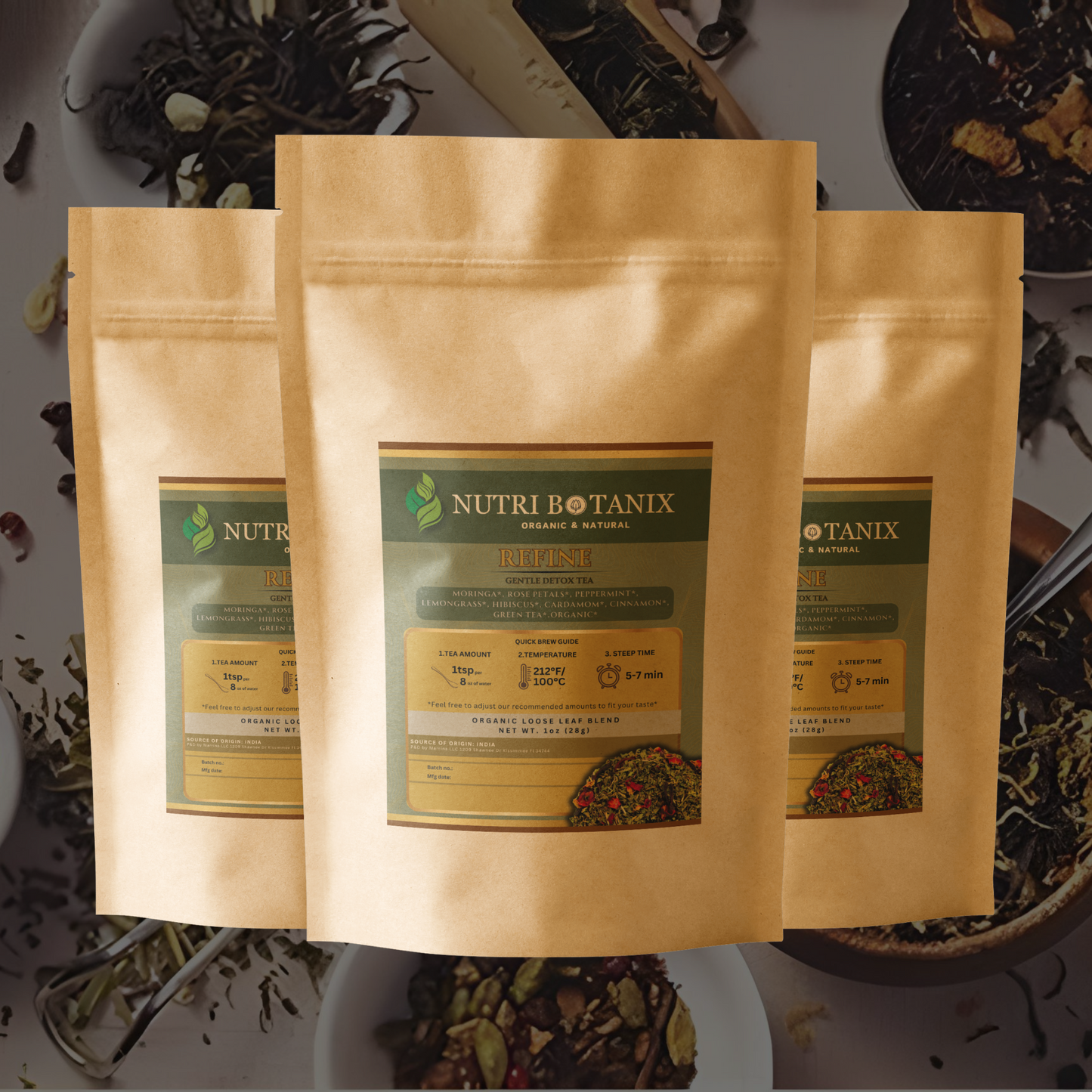
A Floral & Aromatic Botanical Blend
Rose petals and cardamom have been paired in tea, confection, and culinary preparation across Persian, Mughal, and North Indian traditions for centuries. This blend draws on that pairing as its signature — adding hibiscus for color and brightness, cinnamon for warmth, lemongrass and peppermint for freshness, moringa for subtle green depth, and green tea as the structural base.
Refine is not a historical recipe. It is a modern botanical blend built around ingredients that carry a long and well-documented aromatic tradition. The result is a cup that is distinctly floral, lightly spiced, and fragrant in a way that sets it apart from every other tea in the NutriBotanix collection.
Caffeine notice: This blend contains green tea and is not caffeine-free. Steeping at lower temperatures or for shorter times will reduce caffeine extraction.
The Ingredients
Rose Petals — Dried culinary rose petals are one of the most widely used floral ingredients in South Asian, Persian, and Middle Eastern food and beverage traditions. Rose petals appear in Mughal-era confections, Persian sherbet, North Indian sweets and rice preparations, and throughout the region's tea culture. Their flavor is delicate and perfumed — floral without being soapy when used in proportion — and their presence in this blend gives Refine its defining aromatic character. Rose petals and cardamom are the two ingredients around which this blend is built.
Cardamom — The aromatic seed pod of Elettaria cardamomum, native to the forests of southern India and one of the world's most ancient and widely traded spices. Cardamom is documented in ancient Sanskrit texts, referenced in Greek and Roman botanical records, and central to both Indian and Persian culinary tradition. In Persian and Mughal culture, cardamom appeared in tea preparations, rice dishes, and desserts alongside rose — a pairing that has persisted across centuries and geographies. In this blend, cardamom contributes a sweet, floral warmth with a faintly eucalyptus-like edge that ties the rose petals and hibiscus together into a coherent aromatic whole.
Hibiscus (Roselle) — Hibiscus sabdariffa is one of the most geographically widespread botanical tea ingredients in the world — the base of Jamaica in the Caribbean, agua de jamaica in Mexico and Central America, bissap across West Africa, karkadé in Egypt and Sudan, and roselle tea across Southeast Asia. In this blend, hibiscus plays a supporting role rather than the lead — its primary contributions are the deep ruby color it lends to the cup and the tart, cranberry-like brightness that balances the sweetness of the rose petals and cardamom. The color story is vivid and immediate: Refine brews into a jewel-toned red.
Cinnamon — Cinnamon bark has been traded and used across civilizations for millennia, documented in ancient Egyptian, Indian, and Chinese records and integrated into culinary and botanical traditions from South Asia to the Mediterranean. In Persian and South Asian tea and confection traditions, cinnamon appears alongside rose and cardamom as a warming, sweet-spice complement. In this blend, cinnamon adds depth, a familiar warmth, and a slight sweetness that grounds the more delicate floral notes.
Lemongrass — Cymbopogon citratus is a tall aromatic grass native to South and Southeast Asia, widely used in culinary and tea traditions across Thailand, Vietnam, India, and Sri Lanka. Its flavor is bright, clean, and citrusy — the freshest note in this blend. Lemongrass lifts the heavier floral and spice character of the rose, cardamom, and cinnamon and prevents the cup from becoming too perfumed or dense.
Peppermint — Peppermint (Mentha × piperita) is a hybrid herb with centuries of use in European, Mediterranean, and Middle Eastern herbal and culinary traditions. More intense and cooling than spearmint, peppermint adds a clean, refreshing counterpoint to the warm and floral elements in this blend. Alongside lemongrass, it keeps the cup bright and approachable.
Moringa — The Moringa oleifera tree is native to the foothills of the Himalayas and cultivated widely across South Asia, East Africa, and the Caribbean. Known in many cultures as the "Miracle Tree," moringa leaf has been used as a food and botanical ingredient across multiple traditional systems of medicine for centuries. In this blend, moringa contributes a quiet green, slightly vegetal depth that adds complexity without drawing attention to itself — a supporting note beneath the more prominent floral and spice character.
Green Tea — The Camellia sinensis base of this blend. Green tea contributes structure, a clean vegetal foundation, and naturally occurring caffeine. It has been cultivated and used as a tea ingredient across East and South Asia for thousands of years and serves here as the botanical canvas on which the blend's floral and aromatic layers are built.
About This Blend
Refine draws from an aromatic tradition — the pairing of rose petals, cardamom, and warm spice that runs through Persian, Mughal, and North Indian culinary and tea culture — and builds it into a contemporary loose leaf botanical blend. It is the most distinctly floral tea in the NutriBotanix collection, differentiated by its perfumed character from the earthier Ayurvedic blends and the tart hibiscus-forward character of Natural Nurture Tea.
NutriBotanix sources ingredients from suppliers that provide documentation and quality standards appropriate for botanical ingredients.
Brewing Instructions
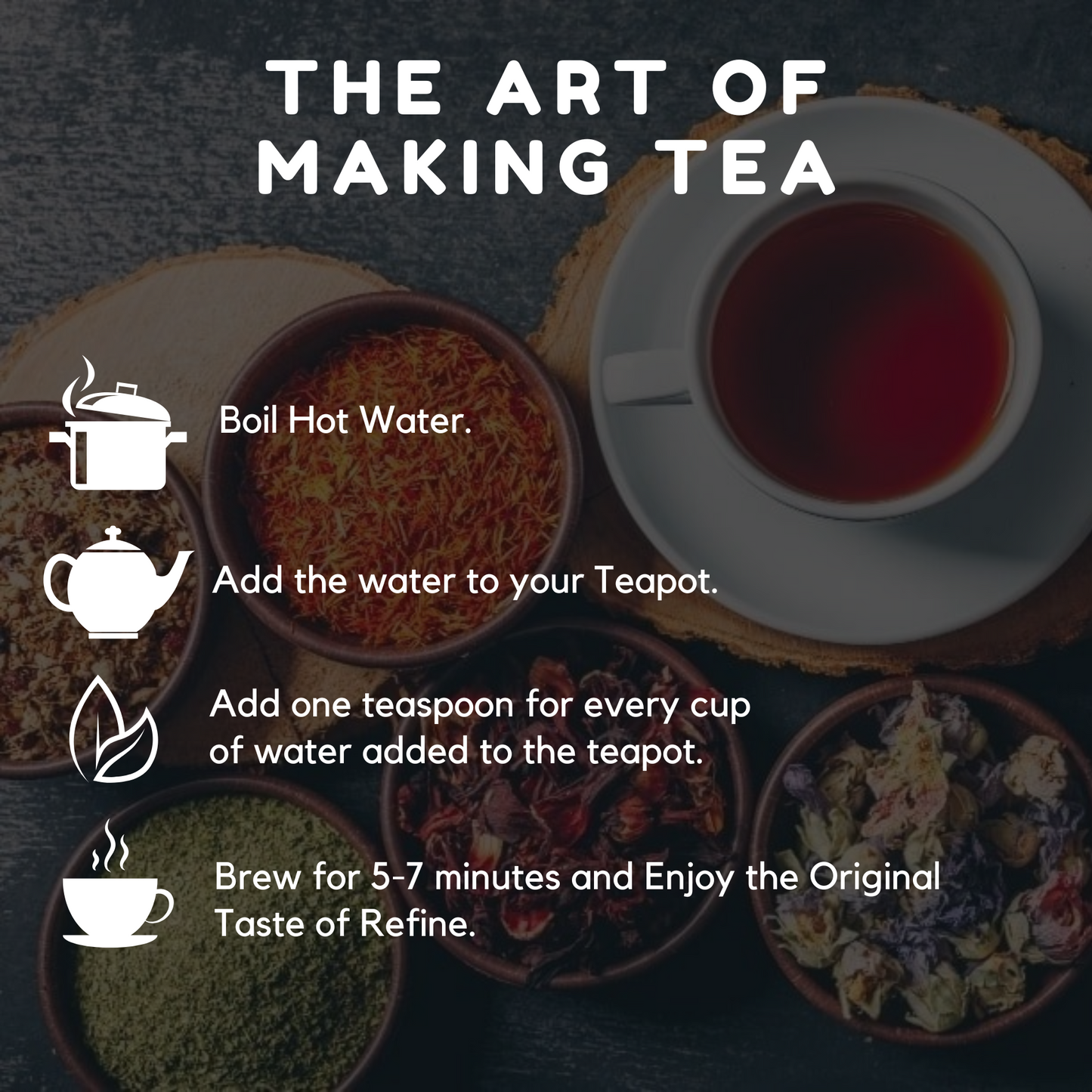
- Amount: 1 teaspoon per 8 oz of water
- Water temperature: 185–195°F (85–90°C) — slightly below boiling preserves the delicate floral notes
- Steep time: 3–4 minutes — shorter for a lighter, more delicate cup; longer for more color and spice depth
- Vessel: Infuser basket, tea strainer, or French press
- Serve: Plain, or with a small amount of honey — the rose petals and cardamom pair particularly well with floral honeys
The floral character of this blend is most prominent when the cup is warm. As it cools, the hibiscus tartness and cinnamon warmth become more noticeable.
Honey Pairings
The rose petal and cardamom signature of this blend calls for honeys whose own floral character reinforces rather than competes with the cup. We recommend:
- Orange Blossom Honey — Orange blossom is among the most delicately floral of all varietal honeys, produced from the nectar of citrus blossoms. Its flavor is light, fragrant, and gently sweet — close enough in aromatic register to rose and cardamom that it deepens the floral experience of the cup rather than introducing a competing flavor. It is the recommended pairing for this blend.
- Wildflower Honey — Wildflower honey varies by region and season, drawing from whatever blooms are local to the beekeeper's area. Its complexity and mixed floral character harmonize naturally with a blend built around rose and hibiscus. A good choice when you want a honey with more character and variation.
Brewing Tools
The right tools make loose leaf tea simple.
- Unbleached Disposable Tea Bags — Single-use, unbleached, chlorine-free. Fill, steep, discard. No strainer required.
- Heart-Shaped Tea Infuser — Reusable stainless-steel infuser for everyday loose-leaf brewing. Fits standard mugs and teacups.
Explore More Floral & Aromatic Blends
- Natural Nurture Tea — A hibiscus-forward blend with moringa, ashwagandha, and turmeric — shares the hibiscus and lemongrass base with a deeper Ayurvedic character
- Kashmiri Kahwa Tea — A traditional Kashmiri spiced green tea with rose petals, cardamom, and almond
- After We Feast Tea — A post-meal botanical blend with rose petals, fennel, ginger, and mint
Frequently Asked Questions
Why is it called Refine Tea?
The name reflects the character of the blend — a lighter, more aromatic, and more refined profile compared to the bolder spice and Ayurvedic blends in the collection. It is a name rooted in flavor character and aesthetic rather than any specific health outcome.
How is Refine Tea different from Natural Nurture Tea?
Both blends share hibiscus, moringa, lemongrass, peppermint, and green tea. The difference is in the supporting botanicals and the resulting character. Natural Nurture includes ashwagandha and turmeric — Ayurvedic roots that give it an earthy, grounding depth. Refine replaces those with rose petals, cardamom, and cinnamon — giving it a distinctly floral, aromatic, and perfumed character inspired by Persian and Mughal culinary tradition rather than Ayurvedic practice.
Does this tea contain caffeine?
Yes. This blend contains green tea, which is naturally caffeinated. This is not a caffeine-free product. Steeping with cooler water or for a shorter time will reduce caffeine extraction. Hibiscus, rose petals, cardamom, cinnamon, lemongrass, peppermint, and moringa are all naturally caffeine-free.
What color does it brew?
A deep ruby red, driven by the hibiscus. The rose petals contribute a subtle warm tone. The color is vivid and holds well across brewing times.
What does it taste like?
Floral and aromatic, with a tart brightness from hibiscus balanced by the sweetness of rose petals and cardamom. Cinnamon adds warmth. Lemongrass and peppermint add freshness. Moringa is a quiet presence in the background. The overall character is more perfumed and delicate than the spice-forward Ayurvedic blends in the collection.
How much should I use per cup?
1 teaspoon per 8 oz is a good starting point. Because the rose petals and cardamom are assertive aromatic ingredients, some people prefer a slightly shorter steep for a more delicate cup.
As with all botanical blends, individuals with health conditions, those who are pregnant or nursing, or those taking medications should consult a healthcare provider before use.
† These statements have not been evaluated by the Food and Drug Administration. This product is not intended to diagnose, treat, cure, or prevent any disease.
Share