

Traditional Use & Responsible Guidance
Traditional Use & Responsible Guidance
Product information is provided for educational and culinary purposes. Traditional use does not establish medical effectiveness. These products are not intended to diagnose, treat, cure, or prevent disease. Review ingredients and product-specific cautions; consult a qualified professional if pregnant, nursing, taking medication, managing a condition, or unsure whether a product is appropriate.
NutriBotanix
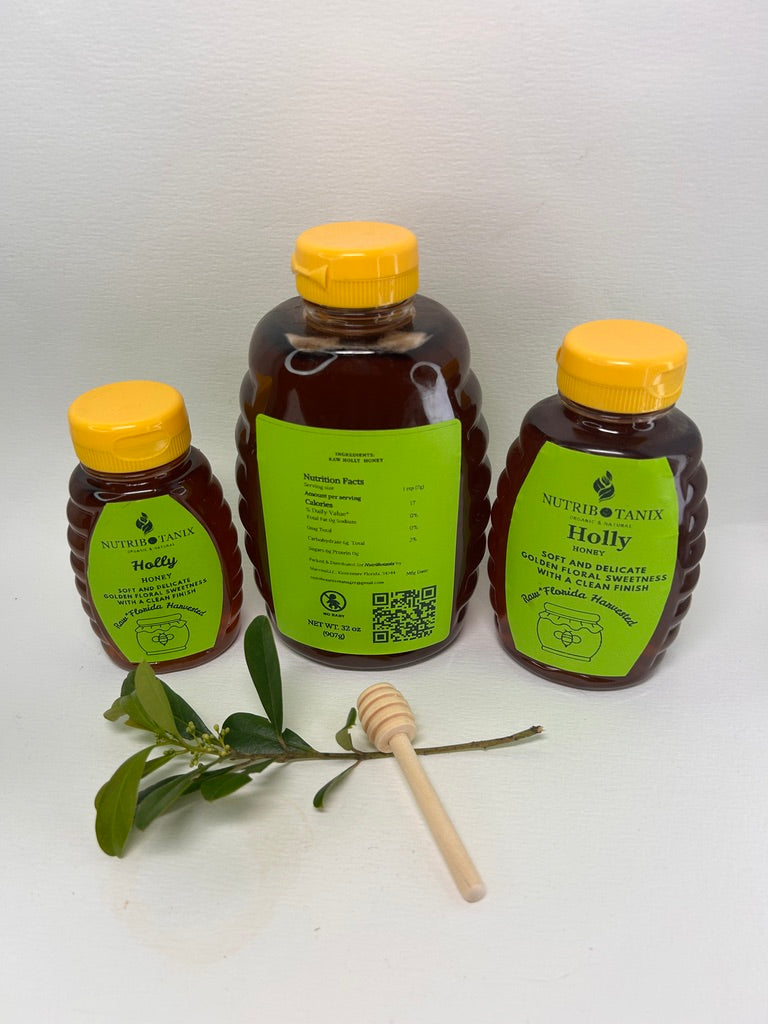
Holly Honey
Holly Honey
Couldn't load pickup availability
Holly Honey
A raw Northwest Florida varietal honey, gathered from native holly trees across the woodlands and wetland edges of the Florida Panhandle.
Floral Source
Holly honey comes from native holly trees in the Ilex genus — the same botanical family as gallberry, but sourced from the taller tree species that grow throughout the hardwood forests and wetland margins of Northwest Florida. Holly is a significant nectar plant across the Florida Panhandle, producing a honey that reflects its native woodland origins.
Holly blooms in spring, and when conditions align, bees work the blossoms heavily. The result is a honey tied to one plant, one landscape, and one season.
Geography & Terroir
This honey comes from hives in the native woodlands of Northwest Florida — the Florida Panhandle region, where the climate shifts toward the temperate South and hardwood forests replace the flatpine landscape of Central Florida.
The combination of native holly, seasonal creek bottoms, and undisturbed forest edges creates the conditions this honey requires. It is not a commercial product. It is a regional one.
Color & Appearance
Light amber to water white, with a clear, bright appearance in the jar. Holly honey shares the lighter color range common to Florida Ilex honeys — clean, pale, and visually striking.
Flavor Profile
Mild and clean, with a gentle sweetness and a slightly floral, lightly fruity finish. Holly honey does not dominate what it touches. It complements — making it one of the more versatile Florida varietals for everyday use.
Texture & Crystallization
Holly honey crystallizes slowly, similar to gallberry. It holds its liquid state well over time. When crystallization occurs, it forms a fine, even grain that spreads easily.
Culinary Uses
Holly honey's mild profile makes it suited to a wide range of applications:
- Spread on toast, biscuits, or English muffins
- Stirred into yogurt, oatmeal, or cottage cheese
- Used as a neutral sweetener in baking and sauces
- Drizzled over mild cheeses — ricotta, fresh mozzarella, brie
- Mixed into vinaigrettes and light marinades
- Added to smoothies or warm drinks
Tea Pairings
Holly's clean, mild sweetness works well where you want honey presence without overpowering the tea:
- Green teas — a natural complement to delicate, grassy profiles
- White teas — pairs well with Silver Needle or White Peony
- Chamomile — mild-on-mild, clean finish
- Light herbal blends — lemon balm, mint, or hibiscus
Frequently Asked Questions
What holly species does this come from?
Florida has several native holly species in the Ilex genus. Holly honey from Northwest Florida typically reflects the native hardwood hollies common to the Panhandle region — distinct from gallberry (Ilex glabra), which grows in the flatwood shrub layer further south.
Is this a monofloral honey?
Yes. Holly honey is a single-source varietal honey produced when bees forage primarily on holly blooms during the spring bloom window.
How rare is holly honey?
Holly honey has limited commercial production. It is a regional specialty tied to specific native landscapes in the Florida Panhandle — not widely distributed outside the region.
Does it crystallize?
Slowly. Like other Florida Ilex honeys, holly tends to hold its liquid state well. If crystallization occurs, gentle warming in a warm water bath will restore it.
Raw Honey Statement
This honey is raw — unheated, unfiltered, and unprocessed beyond light straining to remove wax and debris. It retains its natural pollen, enzymes, and aromatic compounds exactly as the bees produced it.
Bulk sizes may be available at select local markets and events.
Beginner questions & cautions
Is holly honey made from holly berries? No. Bees gather nectar from spring holly blossoms; the honey does not contain holly fruit or berries.
Raw honey is not recommended for children under 12 months of age. Anyone with a known honey or bee-product allergy should seek appropriate professional guidance before use.
Sourcing & traceability
This is a seasonal Northwest Florida harvest tied to native holly bloom across Panhandle woodlands and wetland edges. Bloom strength, weather, surrounding forage, and hive location can create natural variation between harvests. Explore the Honey Learning Center for more about raw honey, seasonal harvests, and provenance.
Learn more
Holly is one of the slower-crystallizing Florida honeys — read Why Does Honey Crystallize? to see why. For a broader look at Florida's floral sources, read Sweet Sunshine in a Jar: Florida Raw Honey.
Continue your honey journey
Compare Florida floral sources in the Honey Varietal Guide, browse Florida Raw Honey, compare a richer honey from the same holly family with Gallberry Honey, or discover a rarer mountain harvest with Sourwood Honey.
Education note: Origin, flavor, culinary use, and traditional honey information are provided for education and do not diagnose, treat, cure, prevent disease, or replace professional medical advice.
Share