

Traditional Use & Responsible Guidance
Traditional Use & Responsible Guidance
Product information is provided for educational and culinary purposes. Traditional use does not establish medical effectiveness. These products are not intended to diagnose, treat, cure, or prevent disease. Review ingredients and product-specific cautions; consult a qualified professional if pregnant, nursing, taking medication, managing a condition, or unsure whether a product is appropriate.
NutriBotanix
Gallberry Honey
Gallberry Honey
Couldn't load pickup availability
Gallberry Honey
A raw North Florida varietal honey, gathered from wild gallberry shrubs across the flatwoods and wetland edges of the Florida Panhandle and North Florida.
Floral Source
Gallberry honey comes from Ilex glabra — the inkberry holly — a low-growing native shrub that thrives in the pine flatwoods, wetlands, and untouched backroads of North Florida and South Georgia. It is a member of the holly family, and one of the Southeast's most reliable native nectar sources.
If you've driven through rural North Florida near swampy areas or pine woods, you've passed gallberry without knowing it. The bees know exactly where it is. When it blooms, they work it hard.
Geography & Terroir
This honey comes from hives placed in the native flatwood landscapes of North Florida — not commercial farmland, not managed monoculture. Wild gallberry, wild landscape, wild honey.
The region's combination of sandy soils, seasonal flooding, and dense pine canopy creates the ecological conditions gallberry needs to thrive. Bees foraging here produce a honey that reflects the landscape directly — rich, robust, and distinctly Southern.
Color & Appearance
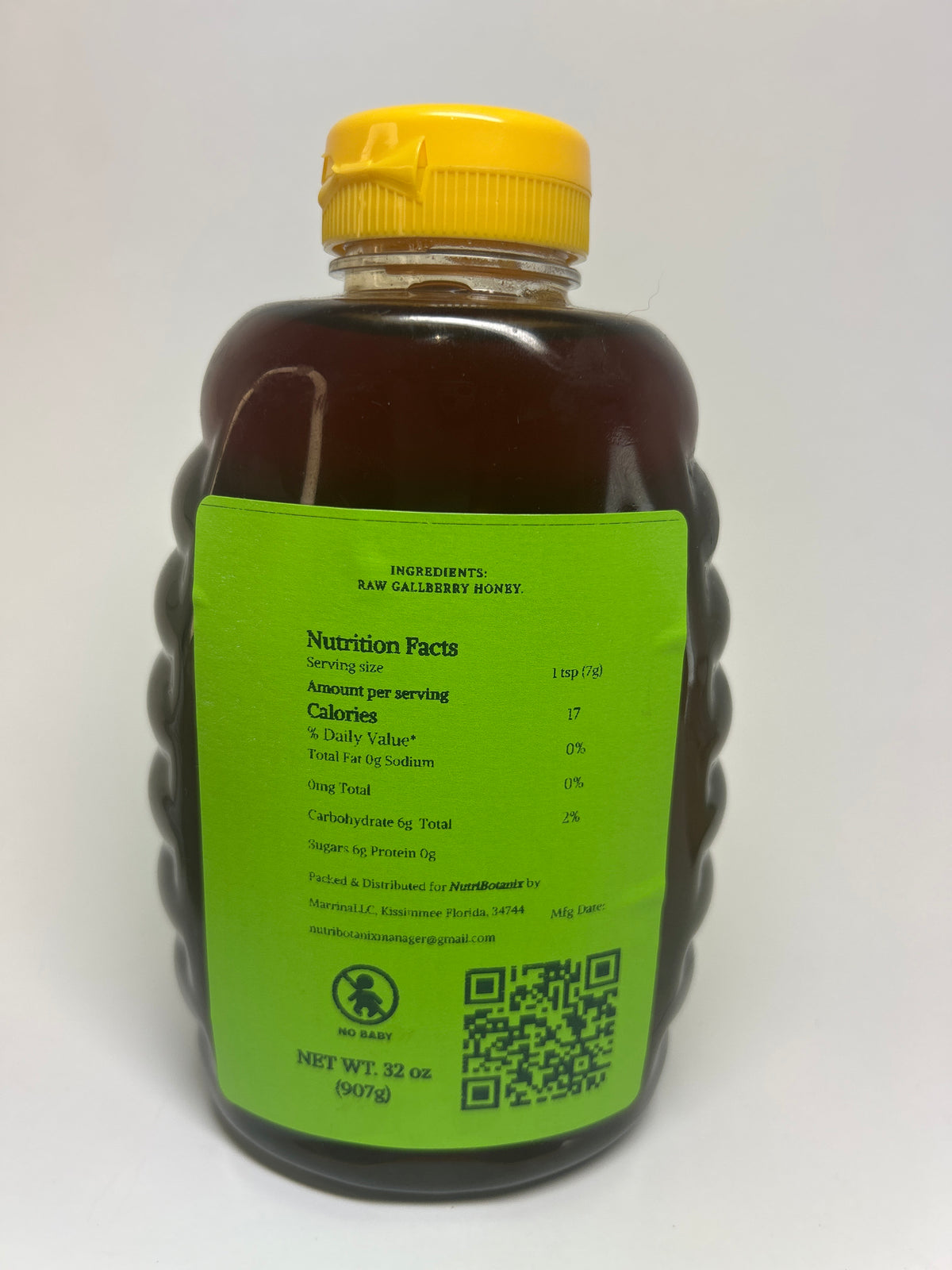
Dark amber to deep amber, with a rich, caramel tone. Gallberry is one of the more richly colored Florida honeys — closer in depth to sourwood than to the lighter orange blossom or wildflower varietals. In the jar, it has a warm, dense richness that reflects its wild flatwoods source.
Flavor Profile
Rich and robust, with a warm caramel sweetness that carries into a smooth, rounded finish. Gallberry brings some of the same deep character found in sourwood, without the sharp floral intensity of orange blossom. It is a full-bodied, easygoing honey — substantial enough to stand on its own, yet versatile enough not to overwhelm what it's paired with.
People who know gallberry tend to keep buying it. It is one of those honeys that earns loyalty quietly.
Texture & Crystallization
Gallberry is known for its slow crystallization — one of the slower-crystallizing Florida honeys. It holds its liquid state well over time. When it does crystallize, it forms a fine, creamy grain.
Culinary Uses
Gallberry's rich, caramel sweetness and clean finish make it versatile across a wide range of uses:
- Spread directly on toast, biscuits, or cornbread
- Stirred into plain yogurt or cottage cheese
- Used as a natural sweetener in baking where a deeper honey flavor is preferred
- Drizzled over soft cheeses — ricotta, brie, fresh chèvre
- Added to salad dressings, marinades, and glazes
- Mixed into smoothies or overnight oats
Tea Pairings
Gallberry's rich, caramel character pairs well with teas where you want a honey that holds its own:
- Green teas — its caramel depth adds warmth without overwhelming delicate green tea notes
- Chamomile — a natural pairing, both robust and floral
- Herbal blends — complements mint, lemon balm, and hibiscus
- Light black teas — Darjeeling, Ceylon, or any first-flush tea
Frequently Asked Questions
What is gallberry?
Gallberry (Ilex glabra) is a native shrub in the holly family, common across the pine flatwoods and wetland edges of North Florida and South Georgia. It is one of the region's most important native nectar plants.
Is this a monofloral honey?
Yes. Gallberry honey is a single-source varietal honey — the bees forage primarily on gallberry during the bloom window. The result is a honey that reflects one plant and one landscape.
Why haven't I heard of gallberry honey before?
Gallberry is a regional honey with limited commercial production. It doesn't travel far from where it's made, and it doesn't get the national attention that tupelo or manuka receive. People who discover it tend to stay with it.
Does it crystallize?
Slowly. Gallberry is one of the slower-crystallizing Florida honeys. If crystallization occurs, gentle warming in a warm water bath will return it to liquid.
Raw Honey Statement
This honey is raw — unheated, unfiltered, and unprocessed beyond light straining to remove wax and debris. It retains its natural pollen, enzymes, and aromatic compounds exactly as the bees produced it.
Bulk sizes may be available at select local markets and events.
Beginner questions & cautions
Gallberry honey is rich and approachable for everyday use. As with all raw honey, do not give it to children under 12 months. Anyone with a known allergy to honey or bee products should avoid it or seek professional guidance before use.
Sourcing & traceability
This honey is sourced from native gallberry flatwoods and wetland-edge landscapes in North Florida. Because weather, bloom timing, and surrounding forage change from season to season, natural variation in color, aroma, and flavor is expected. Explore the Honey Learning Center for more about raw honey, sourcing, and harvest variation.
Learn more about Gallberry
Read North Florida Gallberry Honey — One of the South’s Most Overlooked Honeys, taste it side by side with the Gallberry vs. Wildflower Tasting Guide, or learn why slow-crystallizing honeys behave differently in Why Does Honey Crystallize?
Continue your honey journey
Compare Florida floral origins in the Honey Varietal Guide, browse the Florida Raw Honey collection, or compare Gallberry's rich, caramel-toned profile with Orange Blossom Honey. For a lighter honey from the same holly family, try Holly Honey.
Education note: Origin, flavor, culinary use, and traditional honey information are provided for education and do not diagnose, treat, cure, prevent disease, or replace professional medical advice.
Share