

Traditional Use & Responsible Guidance
Traditional Use & Responsible Guidance
Product information is provided for educational and culinary purposes. Traditional use does not establish medical effectiveness. These products are not intended to diagnose, treat, cure, or prevent disease. Review ingredients and product-specific cautions; consult a qualified professional if pregnant, nursing, taking medication, managing a condition, or unsure whether a product is appropriate.
NutriBotanix
Sourwood Honey
Sourwood Honey
Couldn't load pickup availability
Sourwood Honey
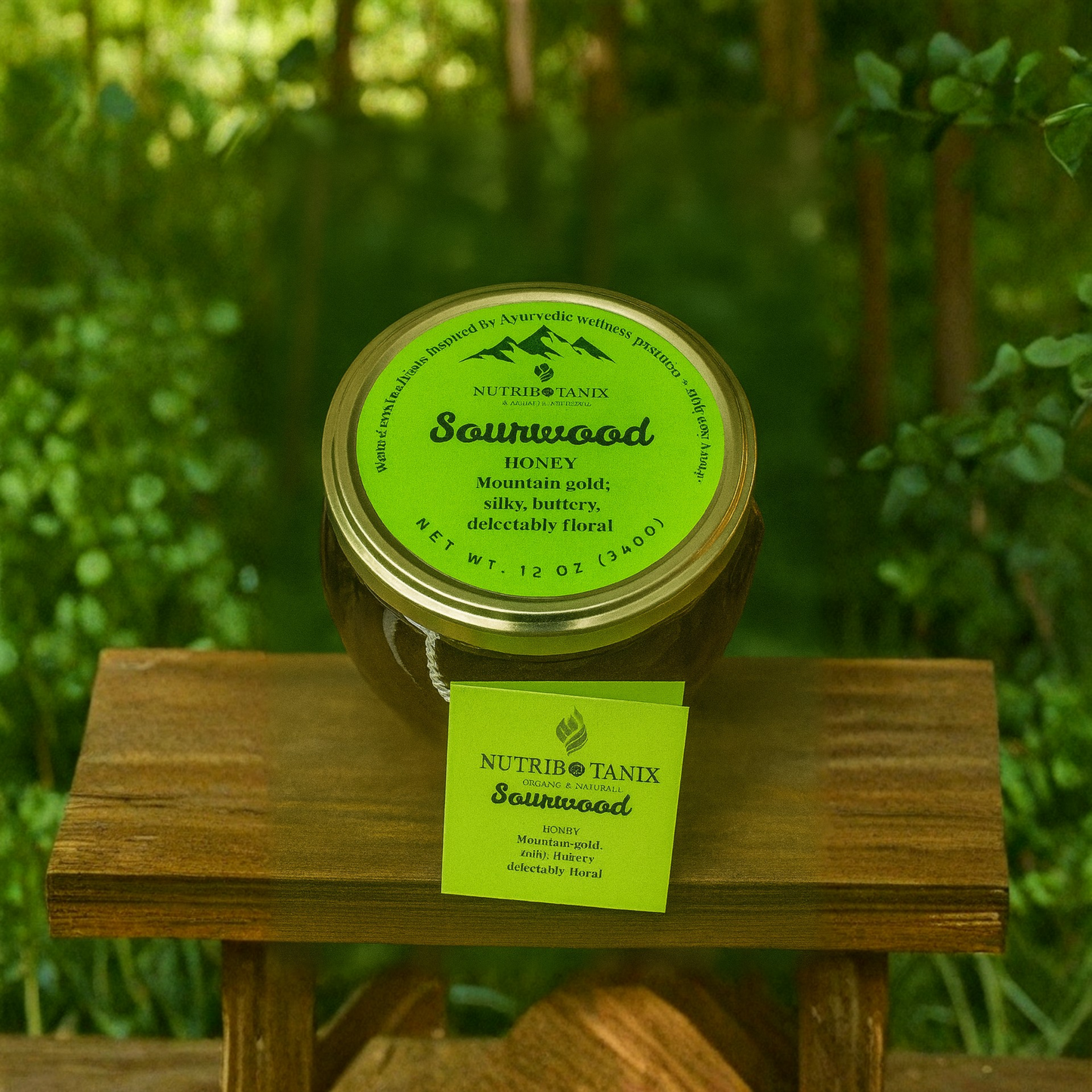
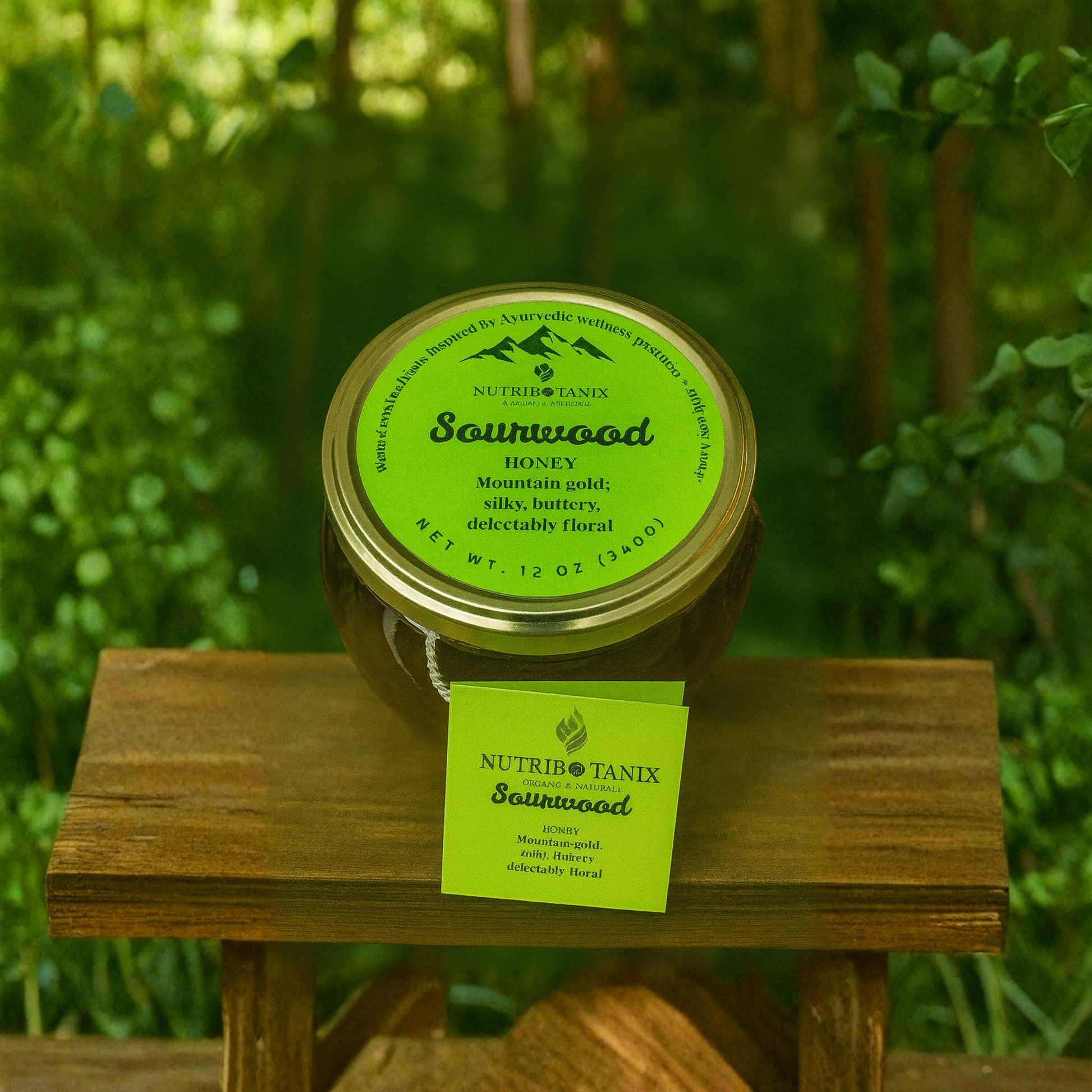
A raw Appalachian varietal honey, sourced from the Blue Ridge Mountains of North Carolina and Tennessee during the narrow window each summer when the sourwood tree comes into bloom. Highly regarded among honey enthusiasts and beekeepers, sourwood honey is prized for a flavor profile that is unlike most American honeys — buttery and smooth, with a delicate spice and a clean, lingering finish.
Floral source
Sourwood honey comes from a single tree: Oxydendrum arboreum, commonly called the sourwood or lily-of-the-valley tree. Native to the Appalachian region of the eastern United States, it grows as a mid-canopy understory tree in the mixed hardwood forests of the mountain hollows and ridgelines. In late June through August, the sourwood produces long, arching clusters of small white bell-shaped flowers — among the most nectar-rich blooms of the Appalachian summer. Honeybees work these blossoms intensively during the brief flowering period. Because sourwood is not a cultivated agricultural crop but a wild forest tree blooming on its own schedule, beekeepers cannot control or extend the harvest window. What the bloom yields each season is what there is.
Region & terroir
Sourwood honey production is concentrated in the southern Appalachian Mountains — particularly the Blue Ridge highlands of western North Carolina, eastern Tennessee, and the mountain counties of northern Georgia. The terrain is steep, forested, and largely roadless, with elevations ranging from 2,000 to over 5,000 feet across the primary sourwood range. Hives are typically placed in forest clearings, along ridge edges, or in the hollows between mountain ridges where sourwood trees grow densely. The soil in this region is predominantly acidic and well-drained — conditions that favor the sourwood tree's growth and contribute to the density of bloom in any given year. Weather during the bloom window matters significantly: a wet, overcast summer can suppress nectar flow, while a dry, warm July with adequate prior rainfall tends to produce the richest harvests. Annual variation in flavor intensity and yield is normal and reflects genuine terroir.
Color & appearance
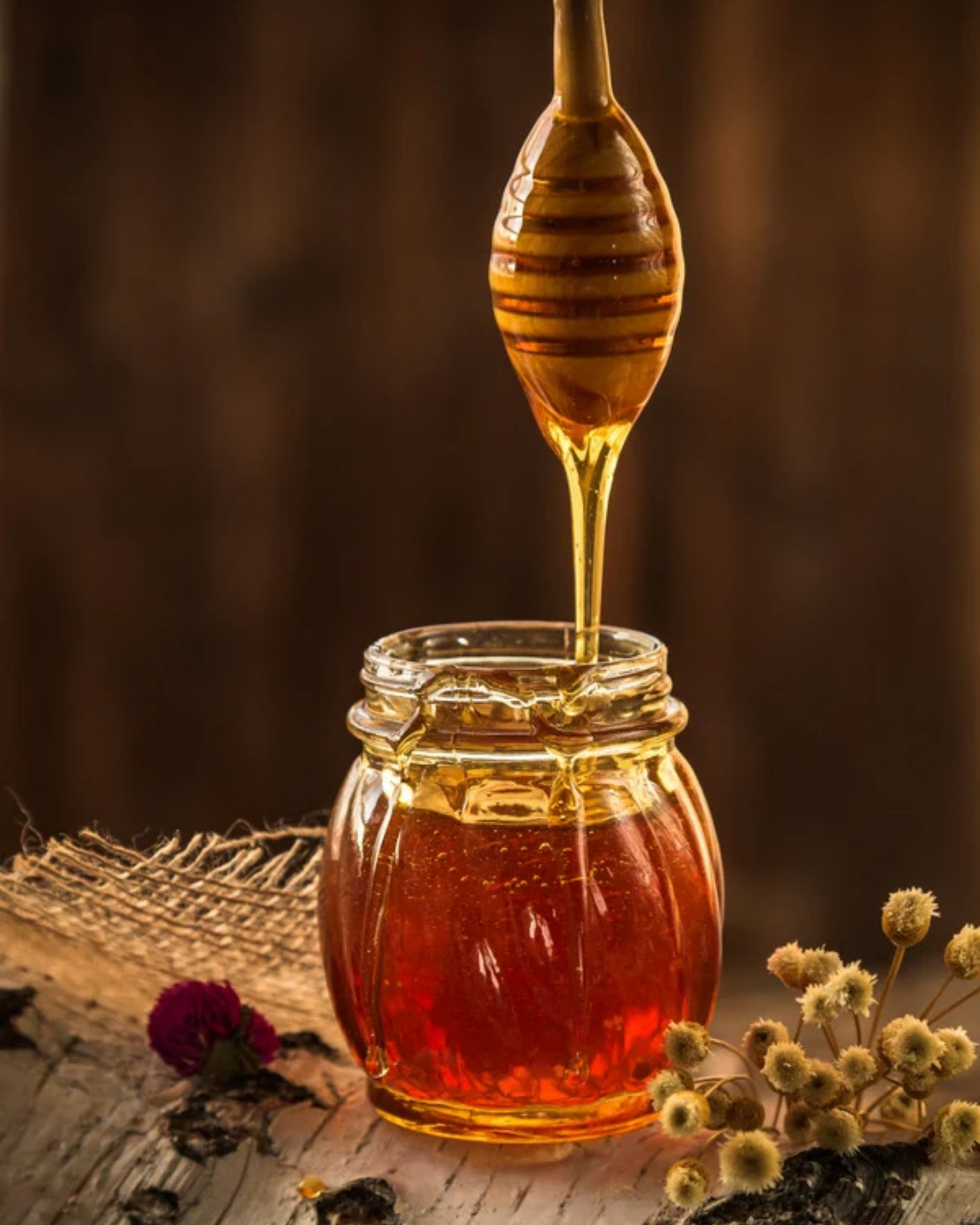
Light amber to water-white at harvest — sourwood honey is among the lighter-colored of the Appalachian varietals. The color can shift slightly from season to season depending on the proportion of sourwood nectar relative to any background forage. A very pale, almost translucent batch indicates a strong, clean sourwood flow. Slightly deeper amber batches reflect more diverse forage in the surrounding forest.
Flavor notes
Sourwood honey has a flavor that is distinct from many common table honeys. The dominant characteristic is a smooth, buttery sweetness — richer and more rounded than clover or wildflower, but without the heavy body of buckwheat. There is a subtle spice note that some describe as a faint anise or clove quality, present in the mid-palate and carrying through to a clean, dry finish. It is not aggressively sweet. The aftertaste is notably mild and pleasant — a quality that makes it particularly well-suited for pairings where the honey should complement rather than overwhelm. Flavor intensity and the prominence of the spice note can vary between harvests and hive locations.
Texture & crystallization
Sourwood honey is notably slower to crystallize than most raw varietal honeys. Its glucose-to-fructose ratio favors fructose, which remains liquid at room temperature longer than glucose. Many sourwood honeys remain pourable for months or longer after harvest when stored properly. When crystallization does occur, it tends to be fine and smooth rather than coarse — producing a spreadable, creamy texture rather than a hard or gritty set. This slow crystallization is considered one of the characteristics that make sourwood appealing for both culinary use and direct consumption. As with all raw honeys, crystallization is natural and reversible. To return crystallized honey to a liquid state, place the open jar in warm (not hot) water and stir gently.
Culinary uses
Sourwood honey's buttery, subtly spiced character makes it particularly well-suited to pairings that call for depth and complexity rather than simple sweetness. Its slow crystallization and smooth texture make it easy to work with in both hot and cold applications.
- Drizzle over aged cheddar, manchego, or a sharp mountain cheese board
- Spoon over warm cornbread or buttermilk biscuits straight from the oven
- Use as a finishing glaze on roasted root vegetables — parsnips, carrots, sweet potato
- Stir into bourbon-based cocktails or old fashioneds where the spice note integrates naturally
- Swirl into oatmeal or steel-cut porridge in place of maple syrup
- Drizzle over vanilla ice cream or ricotta with toasted walnuts
- Use in vinaigrettes paired with apple cider vinegar and whole grain mustard
Tea pairings
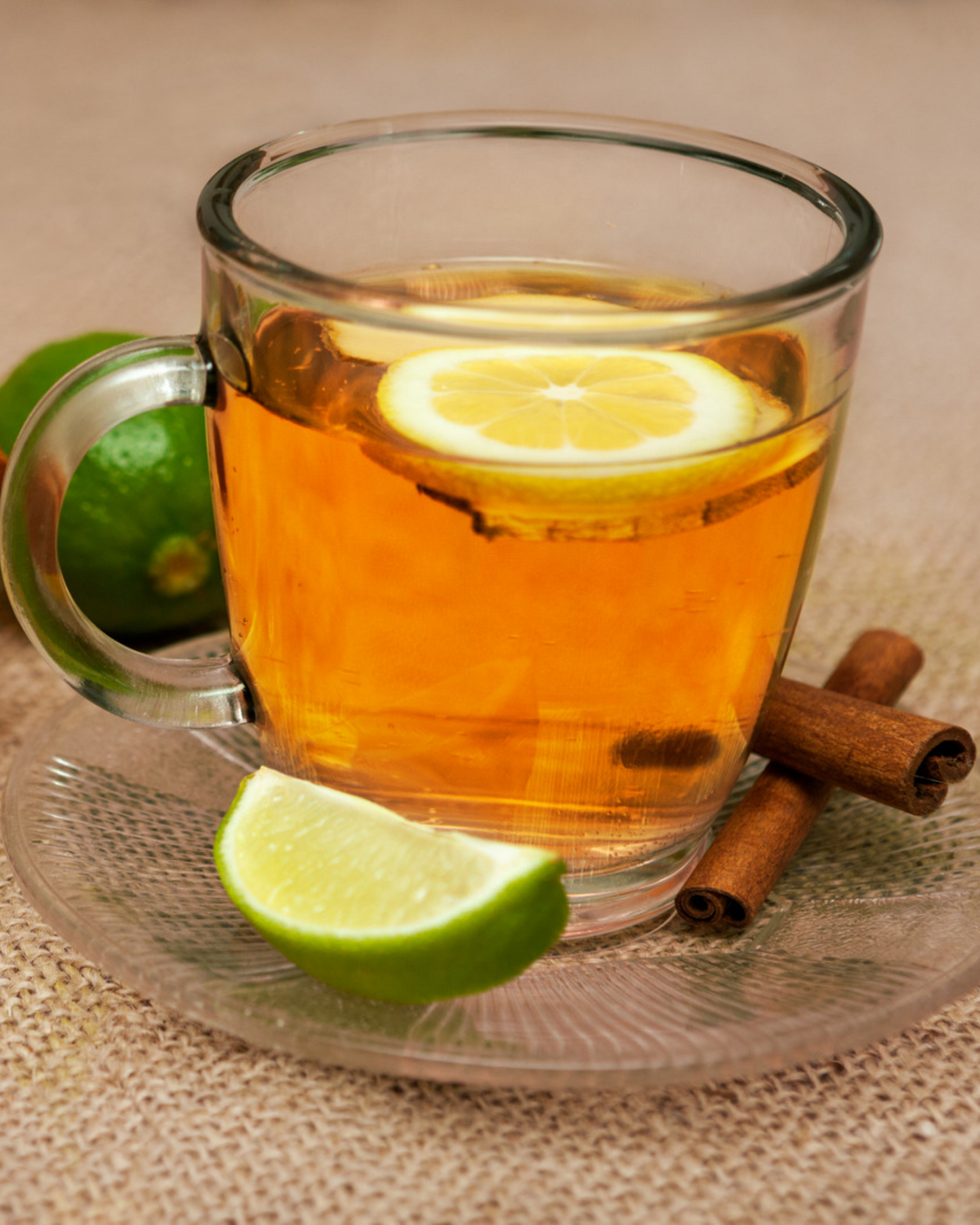
Sourwood's buttery body and quiet spice note pair naturally with teas that have warmth, body, and some complexity of their own. Lighter, delicate teas can be overwhelmed by sourwood's richer character; it performs best alongside teas with depth. Among the NutriBotanix catalog, it pairs well with Masala Tea Leaves, where the spice notes in the honey echo the cardamom, cinnamon, and ginger in the blend. Kashmiri Kahwa is another strong pairing — the cardamom and spice register of the kahwa complements sourwood's mid-palate warmth without competing with it. The Free Radicals Closer, with its black tea base and adaptogenic botanicals, also suits sourwood's weight and finish.
Frequently asked questions
Is this honey raw?
Yes. This honey is raw and unfiltered, meaning it has not been heated or processed in ways that would alter its natural enzyme content, pollen profile, or flavor. Variation in color, viscosity, and flavor intensity between batches is normal and reflects genuine seasonal and geographic differences.
Why is sourwood honey sometimes hard to find?
The sourwood bloom window is short — typically three to five weeks in mid-to-late summer — and the tree grows wild across a relatively limited mountain range. Yield is weather-dependent and cannot be scaled the way agricultural honey crops can. Strong sourwood seasons produce more honey; poor bloom years reduce it significantly. This seasonal variability is inherent to the honey.
Why is Sourwood Honey considered a terroir honey?
Because the flavor depends heavily on a specific combination of tree species, elevation, mountain climate, bloom timing, and annual weather conditions found in the Appalachian region. Sourwood trees cannot be cultivated at commercial scale the way agricultural crops can, making the honey closely tied to the landscape where it is produced.
How should I store it?
At room temperature, away from direct sunlight and heat sources. Refrigeration is not recommended and accelerates crystallization. Sourwood honey's natural resistance to crystallization makes room-temperature storage particularly practical. Raw honey does not spoil.
Will my sourwood honey crystallize?
Eventually, yes — though sourwood crystallizes more slowly than most raw varietal honeys. If it does crystallize, it typically forms a smooth, fine-grained set rather than hard or coarse crystals. To reliquefy, place the jar in warm water and stir gently.
A note on raw honey
All NutriBotanix honeys are raw and minimally processed. Raw honey has not been pasteurized or micro-filtered. It may contain naturally occurring pollen, propolis traces, and small air bubbles. These are normal characteristics of unprocessed honey, not defects. Because raw honey may contain naturally occurring spores, it is not recommended for children under 12 months of age.
Sourcing & traceability
This is a limited Appalachian harvest tied to the summer bloom of wild sourwood trees across the Blue Ridge Mountains of North Carolina and Tennessee. Yield and flavor vary naturally with elevation, weather, bloom strength, and surrounding forest forage. Explore the Honey Learning Center for more about raw honey, seasonal harvests, and provenance.
Continue your honey journey
Discover other limited harvests in Rare & Seasonal Honey, compare floral sources in the Honey Varietal Guide, or explore another Florida provenance harvest with Tupelo-Blackberry Honey.
Education note: Origin, flavor, culinary use, and traditional honey information are provided for education and do not diagnose, treat, cure, prevent disease, or replace professional medical advice.
Share