

Traditional Use & Responsible Guidance
Traditional Use & Responsible Guidance
Product information is provided for educational and culinary purposes. Traditional use does not establish medical effectiveness. These products are not intended to diagnose, treat, cure, or prevent disease. Review ingredients and product-specific cautions; consult a qualified professional if pregnant, nursing, taking medication, managing a condition, or unsure whether a product is appropriate.
NutriBotanix
Manuka Honey with Propolis
Manuka Honey with Propolis
Couldn't load pickup availability
Manuka Honey with Propolis
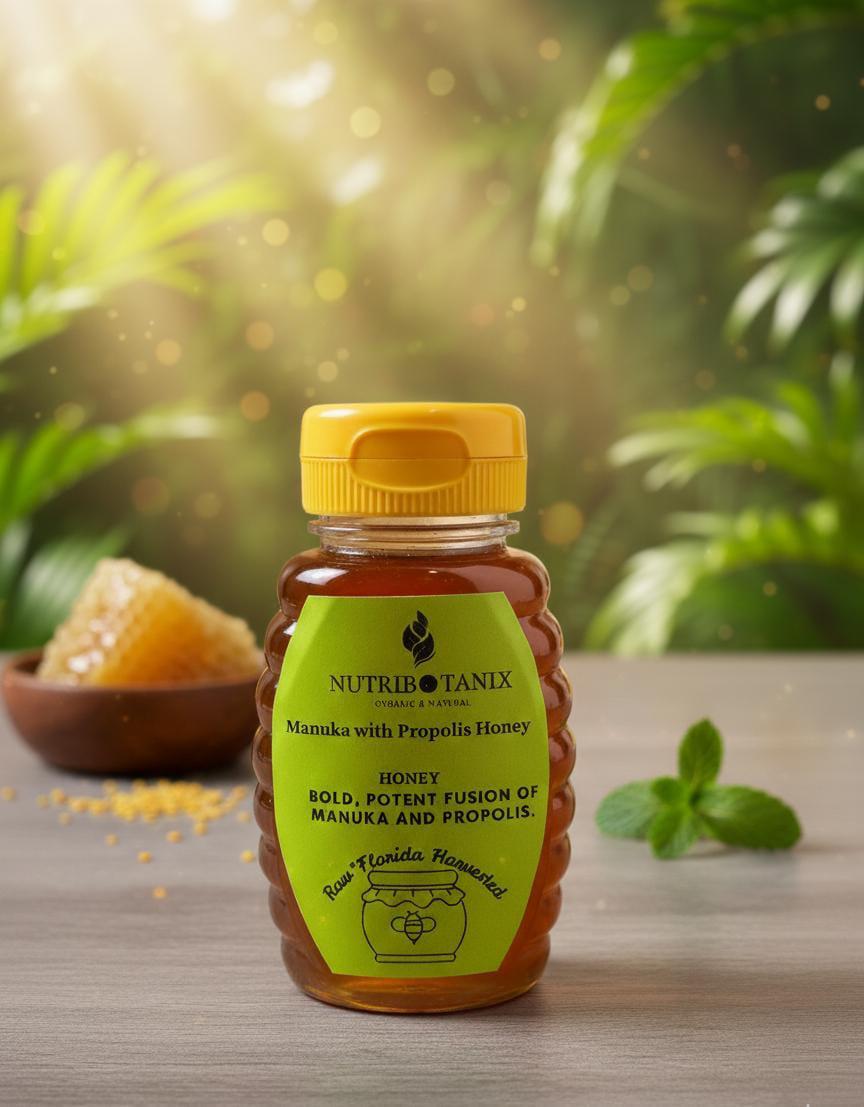
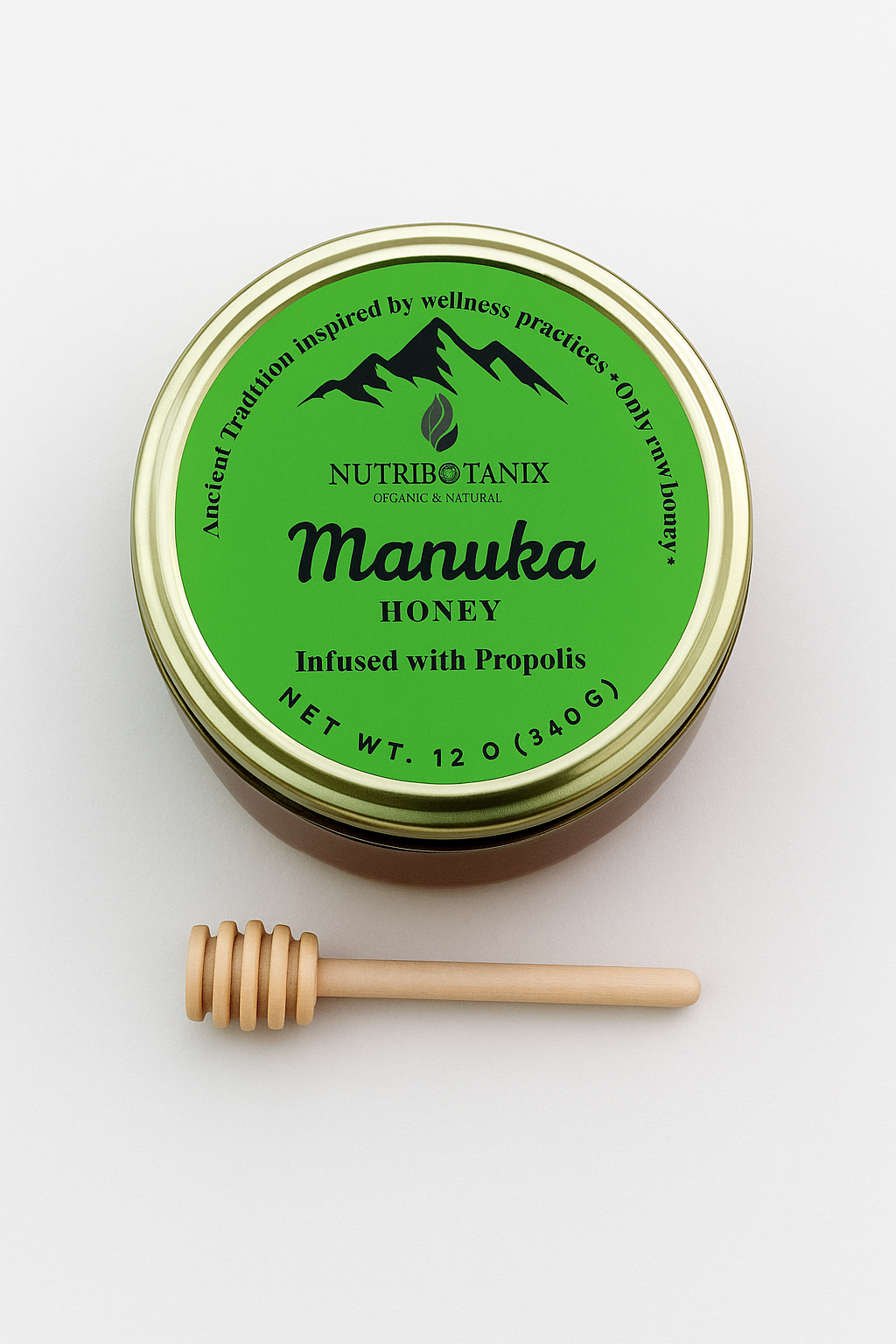
A raw New Zealand specialty honey, produced from the nectar of the mānuka tree and combined with natural propolis — two distinct products of the hive, presented together in one jar.
What It Is
This is a two-component product: raw mānuka honey as the base, with propolis incorporated as a natural hive extract. Mānuka honey is produced from the blossoms of Leptospermum scoparium — the mānuka tree, native to New Zealand and parts of southeastern Australia. Propolis is a resinous compound collected by bees from plant buds and bark, used within the hive as a structural sealant and coating material.
Both are natural products of the hive. This jar contains them together.
Origin
Mānuka honey comes from New Zealand, where the mānuka shrub grows across hillsides, coastal margins, and regenerating native bush. It blooms for a short window each year — typically four to six weeks — and the honey produced during that window carries the plant's distinctive character.
New Zealand's mānuka beekeeping tradition is deeply established. Hives are positioned within or near mānuka-dominant landscapes to capture the bloom, and the resulting honey reflects that specific floral source.
Mānuka Honey
Mānuka honey is darker, denser, and more intensely flavored than most floral honeys. Its color ranges from dark amber to near-black depending on concentration and season. The flavor is robust — earthy, slightly bitter, with a herbal depth and a long, complex finish that lingers after the sweetness fades.
It is not a mild honey. It is a strong, specific one — suited to those who prefer depth over delicacy.
Propolis
Propolis is a natural resinous substance produced by honeybees from plant sources — primarily tree resins and sap. Bees use it to seal gaps in the hive, coat surfaces, and maintain the hive structure. Its composition varies depending on the local plant environment. In its natural form it is dark brown and resinous, with a strong, slightly bitter, balsamic character. When incorporated into honey, it deepens the flavor profile and adds textural complexity.
Color & Texture
Dark amber to deep brown. Dense and slow-moving, with a thick, smooth texture that coats a spoon and holds its shape. Propolis incorporation gives it a slightly heavier body than plain mānuka. Crystallization is slow due to mānuka's high fructose content — this honey tends to stay liquid longer than most varietals.
Flavor Notes
Earthy, herbal, and complex. The mānuka base brings a distinctive bitterness — not unpleasant, but assertive — with a long finish and an earthy, resinous and herbal character that comes from the floral source itself, not from additives. Propolis adds a balsamic, resinous note in the background. The overall profile is bold and distinctive.
This is not a honey for those who want something neutral. It is a honey for those who want something specific.
Culinary Uses
Manuka with propolis is best used in contexts where its strong flavor profile is an asset rather than a background note:
- Spread on dark bread, rye toast, or dense crackers
- Paired with aged cheeses — sharp cheddar, aged gouda, hard sheep's milk varieties
- Drizzled over strong-flavored soft cheeses — blue cheese, washed-rind varieties
- Used as a glaze component for roasted meats where a savory-sweet contrast is desired
- Stirred into strong black tea or chai where its flavor can hold its own
- Used as a finishing honey on a composed cheese board or charcuterie plate
It is not well suited to delicate applications where its flavor would overwhelm — light pastries, mild cheeses, or subtle herbal teas.
Tea Pairings
Mānuka's bold profile pairs best with teas that can match its intensity:
- Strong black teas — Assam, English Breakfast, or any full-bodied breakfast blend
- Chai — the spice notes in chai complement mānuka's earthy depth
- Roasted oolong or hojicha — the roasted grain notes create a complementary contrast
- Pu-erh — both carry earthy, deep, complex profiles that work together
Avoid pairing with green tea, white tea, or delicate florals — mānuka will overpower them.
Frequently Asked Questions
What is mānuka honey?
Mānuka honey is produced from the nectar of Leptospermum scoparium, commonly called the mānuka tree, native to New Zealand. It is harvested during the mānuka bloom window and is known for its dark color, dense texture, and strong, distinctive flavor.
What is propolis?
Propolis is a resinous substance collected by bees from plant sources — primarily tree resin and sap. Bees use it within the hive as a sealant and structural material. It has a strong, balsamic character and dark brown color.
Why is the 12 oz glass jar priced higher than the 16 oz?
The 12 oz variant is presented in a Touraine glass gift jar — a premium glass format suited for gifting or display. The 8 oz and 16 oz variants are in standard PET containers. The pricing reflects the packaging, not just the volume.
Does it crystallize?
Slowly. Mānuka honey has a high fructose-to-glucose ratio, which slows crystallization. It tends to remain liquid longer than most honeys. If crystallization occurs, gentle warming in a warm water bath will restore it.
Is this raw honey?
Yes. This honey is raw — unheated, unfiltered, and unprocessed beyond light straining. It retains its natural composition as produced in the hive.
Raw Honey Statement
This honey is raw — unheated, unfiltered, and unprocessed beyond light straining to remove wax and debris. It retains its natural pollen, enzymes, and aromatic compounds exactly as the bees produced it.
Preparation & storage
Start with a small spoonful to become familiar with the bold, resinous flavor. Enjoy directly, spread on toast or crackers, or stir into warm—not boiling—tea so the flavor remains clear. Store tightly closed at room temperature away from direct sunlight, heat, and moisture. Refrigeration is unnecessary. If crystallization occurs, warm the jar gently in warm water and stir; do not microwave.
Beginner questions & cautions
Is propolis the same as honey? No. Honey is made from floral nectar; propolis is a resinous hive material gathered by bees from plant sources. This jar combines both bee products.
Raw honey is not recommended for children under 12 months of age. Propolis and honey can cause reactions in people sensitive to bee products, pollen, or related plant resins. Anyone with known sensitivities, or anyone pregnant, nursing, taking medication, or managing a health condition, should seek appropriate professional guidance before use.
Sourcing, testing & transparency
The mānuka honey base is identified as New Zealand origin, and propolis is incorporated as a separate hive-derived ingredient. Natural color, texture, and flavor variation can occur between harvests. Review NutriBotanix Testing & Transparency for the standards and documentation currently available; no medical outcome is implied by origin, raw status, or the presence of propolis.
Continue your honey journey
Learn how specialty honeys differ in the Honey Learning Center, compare varietals in the Honey Varietal Guide, browse Rare & Seasonal Honey, or compare a lighter limited varietal with Sourwood Honey.
Education note: Origin, flavor, culinary use, traditional use, and ingredient information are provided for education and do not diagnose, treat, cure, prevent disease, or replace professional medical advice.
Share