
Traditional Use & Responsible Guidance
Traditional Use & Responsible Guidance
Product information is provided for educational and culinary purposes. Traditional use does not establish medical effectiveness. These products are not intended to diagnose, treat, cure, or prevent disease. Review ingredients and product-specific cautions; consult a qualified professional if pregnant, nursing, taking medication, managing a condition, or unsure whether a product is appropriate.
NutriBotanix
Creamed Clover Honey
Creamed Clover Honey
Couldn't load pickup availability
Creamed Clover Honey
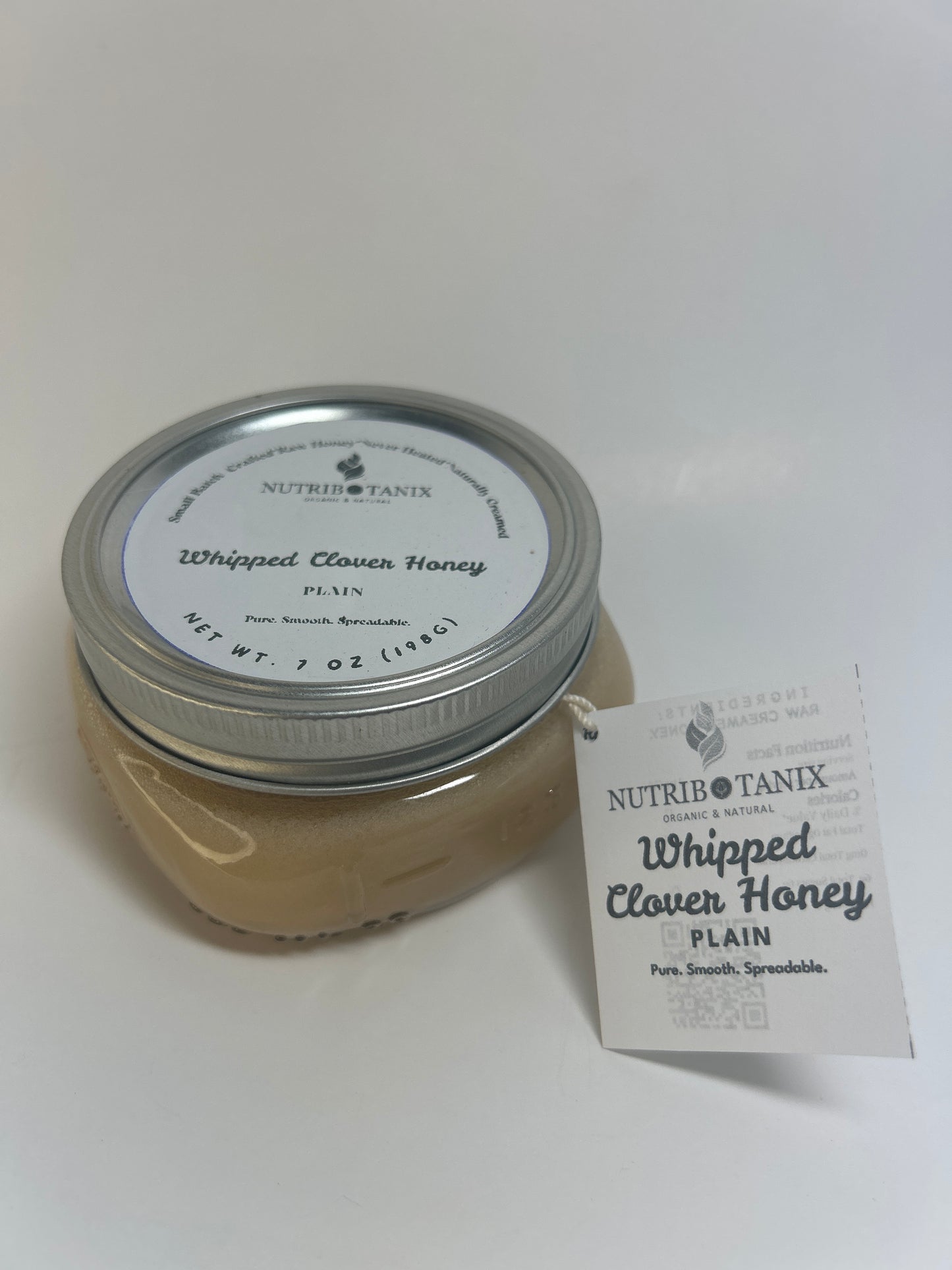
A raw clover honey crafted through controlled crystallization into a smooth, spreadable texture. Presented in a 7 oz glass jar.
What Creamed Honey Is
Creamed honey is not whipped, blended with cream, or processed with additives. It is raw honey that has been guided through a specific crystallization process — one that produces very fine, uniform crystals rather than the coarse, grainy texture that occurs when honey crystallizes on its own.
The result is a honey with a soft, smooth, butter-like consistency that spreads cleanly at room temperature. The flavor, pollen, enzymes, and raw composition of the honey are unchanged. Only the texture has been shaped.
Controlled Crystallization
All raw honey eventually crystallizes. The crystallization process is determined by the ratio of glucose to fructose in the honey, the temperature at which it is stored, and the size of the seed crystals present in the batch.
In creamed honey production, a small quantity of finely crystallized honey — called a seed — is introduced into liquid honey at a controlled temperature. The seed crystals guide the formation of new crystals throughout the batch, producing a fine, even grain that gives creamed honey its characteristic smooth texture.
No heat. No additives. No shortcuts. The process takes time, and the result reflects that.
Floral Source
This creamed honey is built on a clover base. Clover honey comes from the blossoms of white and red clover — Trifolium repens and Trifolium pratense — two of the most widely distributed nectar plants in North America. Clover is a reliable, generous nectar source, and the honey it produces is among the most consistent and well-regarded in American beekeeping.
Clover honey's mild, clean sweetness and near-neutral flavor profile make it an ideal base for creaming — the controlled crystallization process enhances its texture without introducing competing flavors.
Color & Texture
Ivory to pale cream in color — lighter than most liquid honeys due to the fine crystal structure that scatters light differently than liquid amber. The texture is smooth and dense, similar to soft butter or thick frosting, with no graininess when spread.
At room temperature it holds its shape on a knife or spoon. It does not drip or run. It spreads.
Flavor Notes
Clean, mild, and gently sweet — clover honey's characteristic profile carries through into the creamed form without alteration. There is a faint floral note in the background and a smooth, even finish with no bitterness or sharpness. It is a neutral-forward honey, suited to those who want sweetness without strong floral intensity.
The creaming process does not change the flavor. It changes only the experience of eating it.
Storage
Store at room temperature, away from direct sunlight and heat sources. Creamed honey is stable at room temperature and does not require refrigeration. Refrigeration will firm the texture significantly — if the honey becomes too firm, allow it to come to room temperature before use.
Do not microwave. Do not expose to temperatures above 95°F (35°C) — prolonged heat will melt the crystal structure and return the honey to a liquid state, which cannot be reversed without reseeding.
Culinary Uses
Creamed clover honey's spreadable texture opens applications that pourable honey cannot easily fill:
- Spread directly on toast, English muffins, croissants, or bagels
- Used as a butter substitute on warm biscuits or cornbread
- Layered on a charcuterie or cheese board alongside mild and medium cheeses
- Stirred into oatmeal, yogurt, or ricotta for a smooth sweetener without pooling
- Used as a filling layer in crepes or waffles
- Paired with nut butters — almond, cashew, or sunflower — as a spread combination
- Used as a glaze base for roasted vegetables or mild proteins
Frequently Asked Questions
Is creamed honey the same as regular honey?
Yes, in terms of composition. Creamed honey is raw honey that has been crystallized under controlled conditions to produce a fine, smooth texture. The flavor, pollen, and raw composition are identical to liquid honey from the same source.
Does creamed honey melt?
If exposed to sustained heat above approximately 95°F (35°C), the crystal structure will begin to break down and the honey will return to a liquid or semi-liquid state. Store at room temperature and away from heat sources to maintain the creamed texture.
Is there dairy in creamed honey?
No. The name refers to the smooth, cream-like texture produced by fine crystallization — not to any dairy ingredient. Creamed honey contains only honey.
Can I use it the same way as liquid honey?
For spreading applications, creamed honey is superior to liquid honey. For applications that require the honey to pour, drizzle, or dissolve into a liquid, liquid honey is the better choice. Both come from the same source.
Raw Honey Statement
This honey is raw — unheated, unfiltered, and unprocessed beyond the controlled crystallization process and light straining. It retains its natural pollen, enzymes, and aromatic compounds exactly as the bees produced it.
Beginner questions & cautions
Why is it pale if it contains only honey? The fine crystal structure scatters light, creating the ivory appearance. No cream, dairy, or whitening ingredient is added.
Raw honey is not recommended for children under 12 months of age. Anyone with a known honey or bee-product allergy should seek appropriate professional guidance before use.
Sourcing & transparency
This product is made from raw clover honey and shaped through controlled crystallization; no dairy or other ingredient is added. Clover is a widely distributed North American nectar source, and natural variation in color and flavor can occur between harvests. Explore the Honey Learning Center for more about raw honey, crystallization, and storage.
Continue your honey journey
Browse other crafted and limited products in Rare & Seasonal Honey, compare liquid floral sources in the Honey Varietal Guide, or explore a bold specialty profile with Manuka Honey with Propolis.
Education note: Origin, flavor, culinary use, and traditional honey information are provided for education and do not diagnose, treat, cure, prevent disease, or replace professional medical advice.
Share