Traditional Use & Responsible Guidance
Traditional Use & Responsible Guidance
Product information is provided for educational and culinary purposes. Traditional use does not establish medical effectiveness. These products are not intended to diagnose, treat, cure, or prevent disease. Review ingredients and product-specific cautions; consult a qualified professional if pregnant, nursing, taking medication, managing a condition, or unsure whether a product is appropriate.
NutriBotanix
Mrs. T Tea
Mrs. T Tea
Couldn't load pickup availability
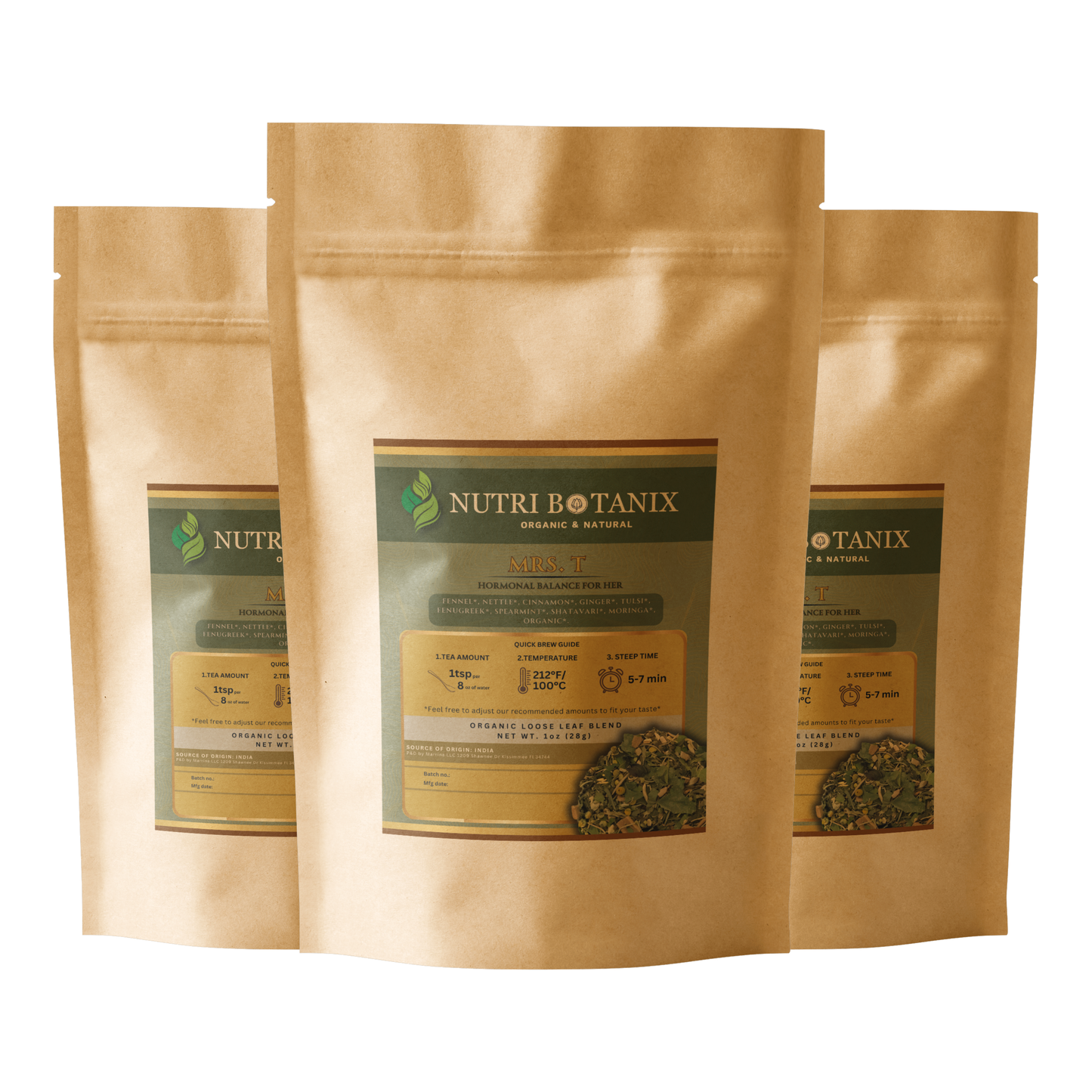
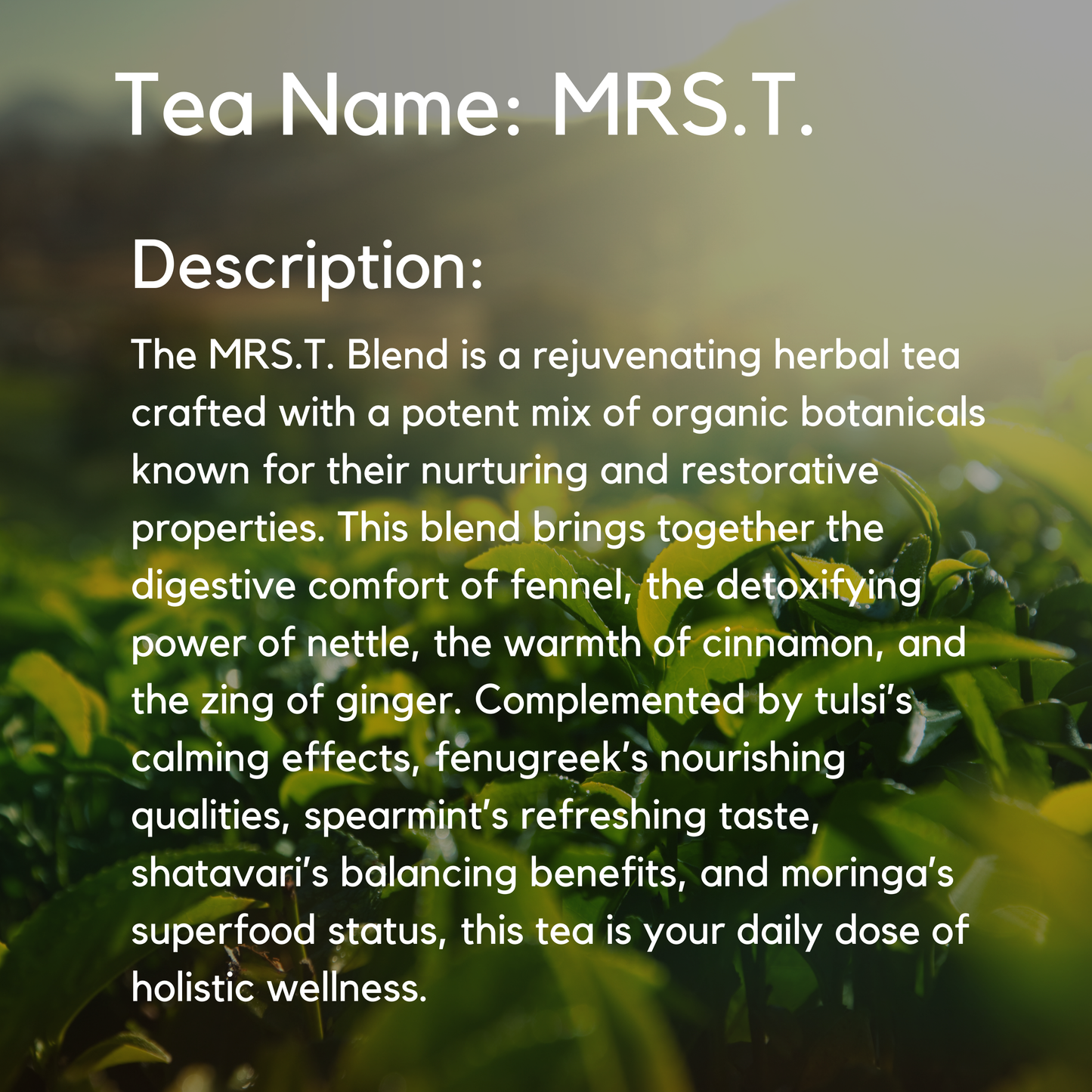
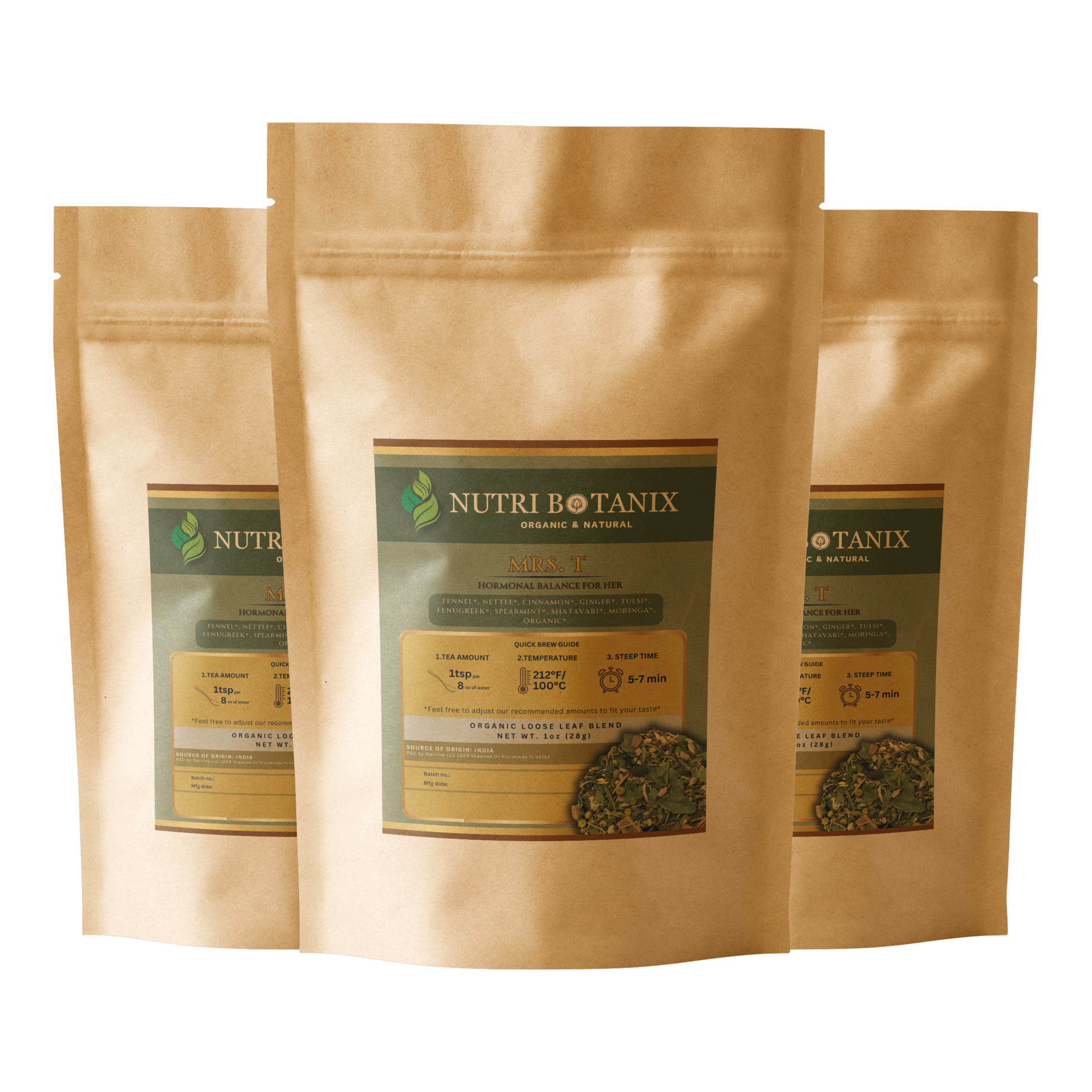
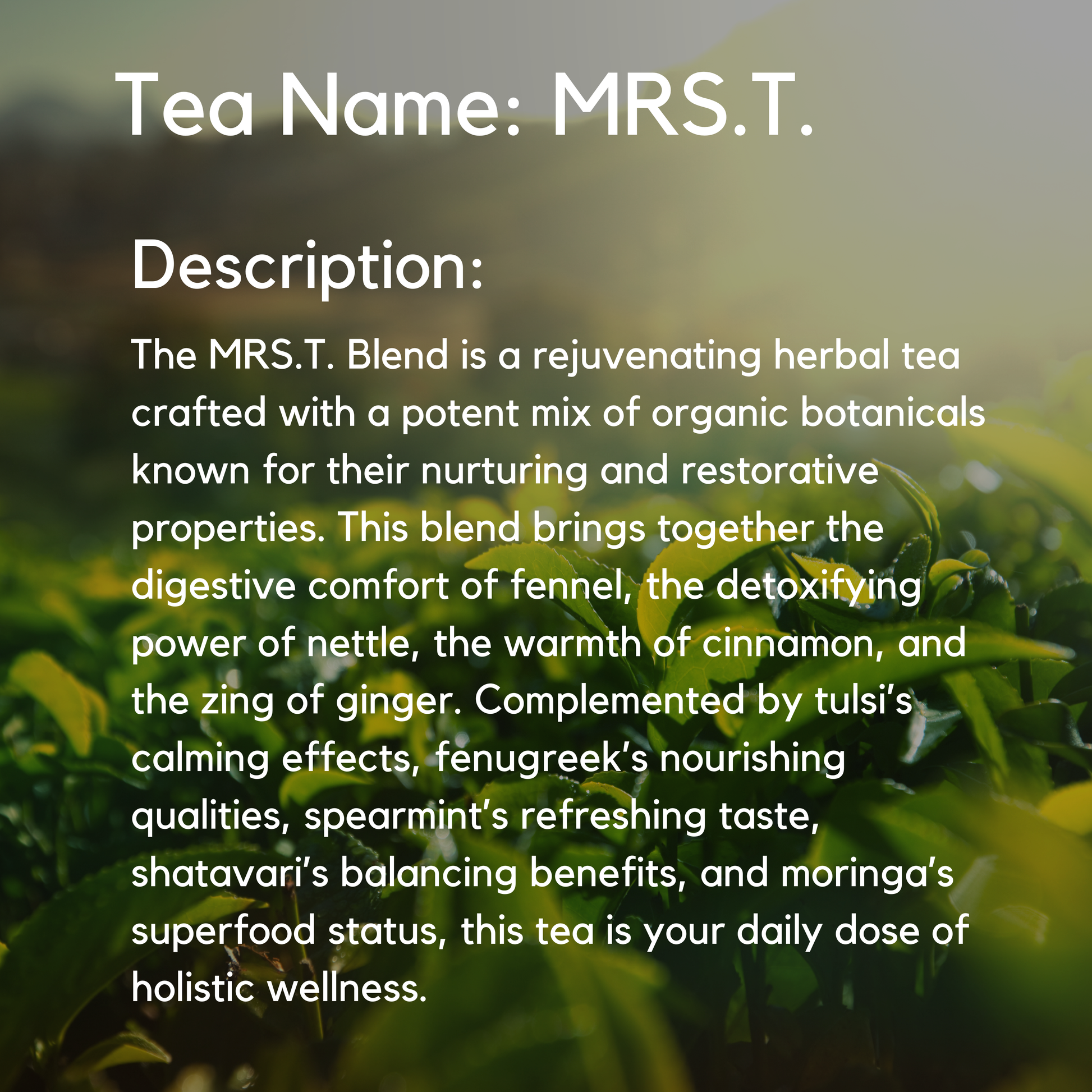
Mrs. T Tea is a caffeine-free botanical blend where classical Ayurvedic Rasayana tradition meets everyday culinary herbs. Shatavari and Tulsi anchor the formula in Ayurvedic botanical history, while fennel, spearmint, ginger, cinnamon, fenugreek, moringa, and nettle bring aromatic brightness, culinary depth, and cross-cultural character to the cup. Lighter and more approachable than its companion MR. T Tea, this is a blend for anyone who wants the depth of Ayurvedic botanical tradition in a bright, herbal, caffeine-free cup.
This blend contains no Camellia sinensis and is caffeine-free by composition.
The Botanicals
Shatavari Root (Asparagus racemosus)
Shatavari is a climbing plant of the asparagus family, native to the forests and grasslands of India and the Himalayas. Its Sanskrit name — loosely translated as "she who possesses a hundred roots" — reflects its deep presence in Ayurvedic botanical literature. It appears extensively in classical texts including the Charaka Samhita, where it is recognized as a Rasayana botanical of significant standing. Shatavari has been used in Ayurvedic formulations for generations across South Asia and contributes a subtle, slightly sweet character to this blend.
Tulsi / Holy Basil (Ocimum tenuiflorum)
Tulsi — known as Holy Basil in English — holds one of the most significant places of any plant in South Asian cultural and botanical history. Native to the Indian subcontinent, it has been cultivated in Hindu households, temples, and Ayurvedic gardens for millennia. In classical Ayurvedic literature, Tulsi is classified as a Rasayana botanical and is among the plants that qualify as true adaptogens — botanicals with a long documented history of traditional use and a recognized presence in Ayurvedic practice. Its flavor is complex: clove-like, slightly peppery, with a subtle sweetness that opens the aromatic character of this blend. Across South Asia, Tulsi tea is a daily ritual deeply woven into the cultural fabric of the region.
Fenugreek (Trigonella foenum-graecum)
Fenugreek is one of the oldest cultivated plants in the world, with archaeological evidence of its use in the Near East dating back over six thousand years. In South Asian and Middle Eastern culinary tradition, fenugreek seeds and leaves are foundational ingredients — appearing in Indian spice blends, Ethiopian berbere, Egyptian breads, and Persian stews. In Ayurvedic botanical tradition, it appears under the Sanskrit name Methi and has been part of compound formulas for centuries. Its flavor is distinctive: warm, slightly bitter, with a maple-like depth that adds a grounding culinary note to this blend.
Moringa (Moringa oleifera)
Moringa is a fast-growing tree native to the foothills of the Himalayas in northern India, now cultivated across tropical regions from West Africa to the Philippines and Central America. Known in India as the "drumstick tree" for the shape of its seed pods, moringa leaves, flowers, and pods have been part of South Asian, East African, and Southeast Asian food culture for generations — used in curries, soups, and daily meals long before the plant attracted international attention. In this blend, moringa leaf contributes a mild, grassy character that adds botanical depth without dominating the more aromatic herbs.
Nettle Leaf (Urtica dioica)
Stinging nettle has been gathered and used in European food and botanical tradition for centuries, particularly across the British Isles, Scandinavia, and Central Europe. Nettle leaves were cooked as a pot herb, brewed into teas, and incorporated into seasonal dishes long before modern herbalism gave them their current profile. The plant is also referenced in traditional Ayurvedic practice as Vrishchikali. Dried and steeped, nettle loses its sting entirely and contributes a mild, green, slightly mineral character to the cup — a gentle counterpoint to the warmer spice notes in this blend.
Fennel Seed (Foeniculum vulgare)
Fennel is a plant with roots in Mediterranean culinary tradition, cultivated and traded across ancient Greece, Rome, the Arab world, and India. In South Asian cooking, fennel seeds are ubiquitous — used in spice blends, mouth fresheners, and digestive preparations eaten after meals. In Ayurvedic tradition, fennel seed (Shatapushpa) has a long documented presence in compound botanical formulas. In this blend, fennel contributes its characteristic sweet anise character, which brightens and lifts the heavier, earthier botanicals in the formula.
Spearmint (Mentha spicata)
Spearmint has been cultivated across the Mediterranean and Middle East for millennia, and its use in herbal teas spans cultures from Moroccan mint tea to South Asian herbal preparations. Lighter and sweeter than peppermint, spearmint brings a clean, bright top note that opens the aromatic profile of this blend. In combination with fennel and cinnamon, it creates the bright, herbal character that distinguishes Mrs. T Tea from the earthier, deeper profile of its companion MR. T Tea.
Ginger (Zingiber officinale)
Ginger is one of the most globally distributed culinary botanicals in history — native to Southeast Asia and traded across ancient spice routes into South Asia, the Arab world, East Africa, and eventually Europe and the Americas. In South Asian culinary and Ayurvedic tradition, ginger (Sunthi when dried) appears in a vast range of preparations and is one of the most widely used botanical ingredients in classical Ayurvedic formulas. In this blend, dried ginger contributes a warm, lightly spicy backbone that ties the aromatic herbs together and gives the cup its characteristic warmth.
Cinnamon (Cinnamomum verum)
True cinnamon — Cinnamomum verum, sometimes called Ceylon cinnamon — has been one of the most prized spice trade commodities in history, originating in Sri Lanka and traveling ancient trade routes into the Arab world, Egypt, and eventually Europe. In South Asian culinary and botanical tradition, cinnamon is a warming spice used across a wide range of preparations. In this blend, it adds aromatic sweetness and gentle warmth that rounds out the brighter herbal notes of fennel, spearmint, and moringa.
About This Blend
Mrs. T Tea is built around two classical Ayurvedic Rasayana botanicals — Shatavari and Tulsi — supported by seven culinary and botanical herbs drawn from South Asian, European, and global food traditions. The result is a blend with genuine botanical depth and a bright, herbal, aromatic character that makes it approachable as an everyday cup. Where MR. T Tea leads with earthy Rasayana depth, Mrs. T Tea leads with brightness: the sweet anise of fennel, the clean lift of spearmint, the maple warmth of fenugreek, and the aromatic complexity of cinnamon and ginger. It brews to a warm amber with a complex, layered aroma and a finish shaped by the floral-spice character of Tulsi.
This is a caffeine-free blend — there is no Camellia sinensis in the formula. It can be brewed morning, afternoon, or evening without concern for caffeine content.
Brewing Instructions
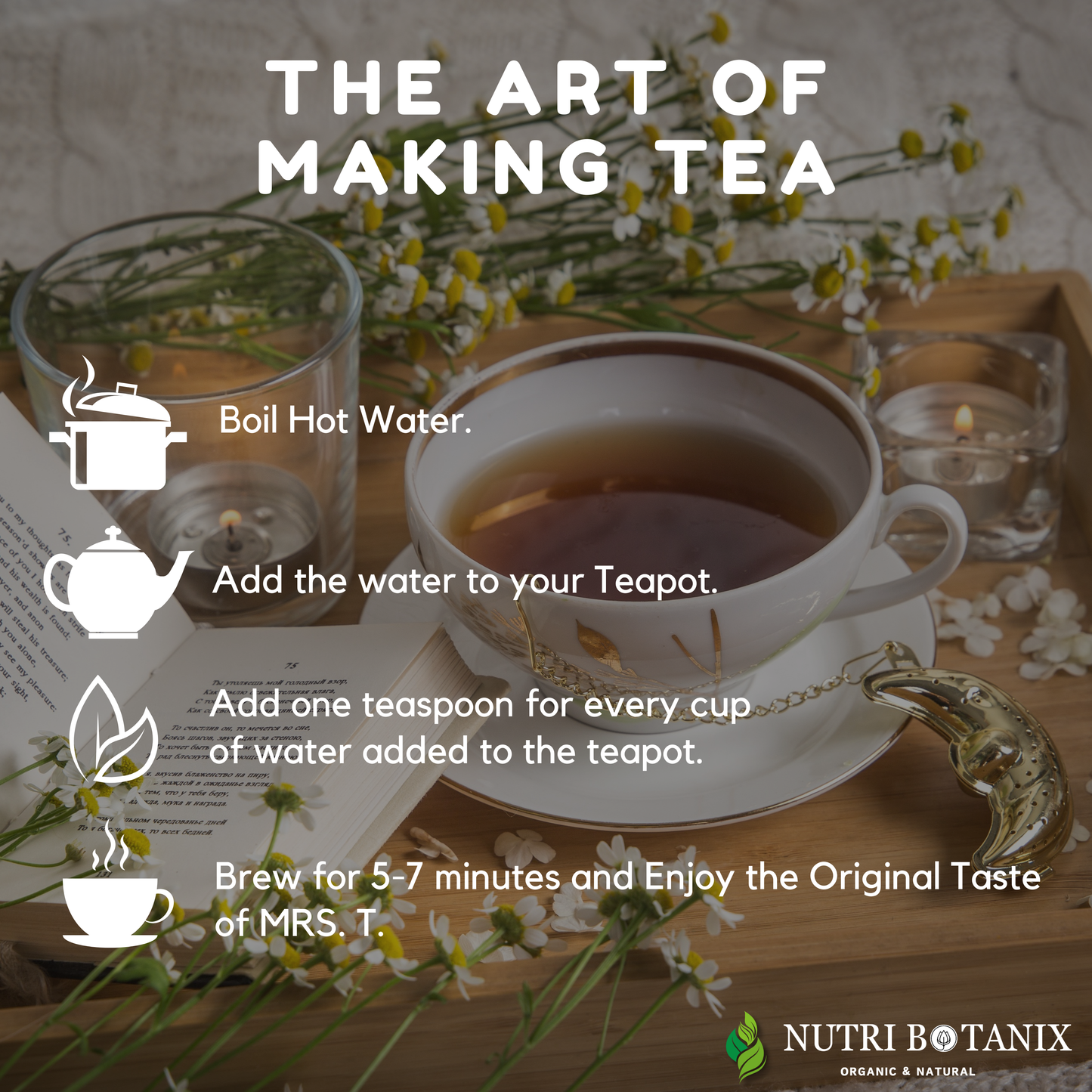
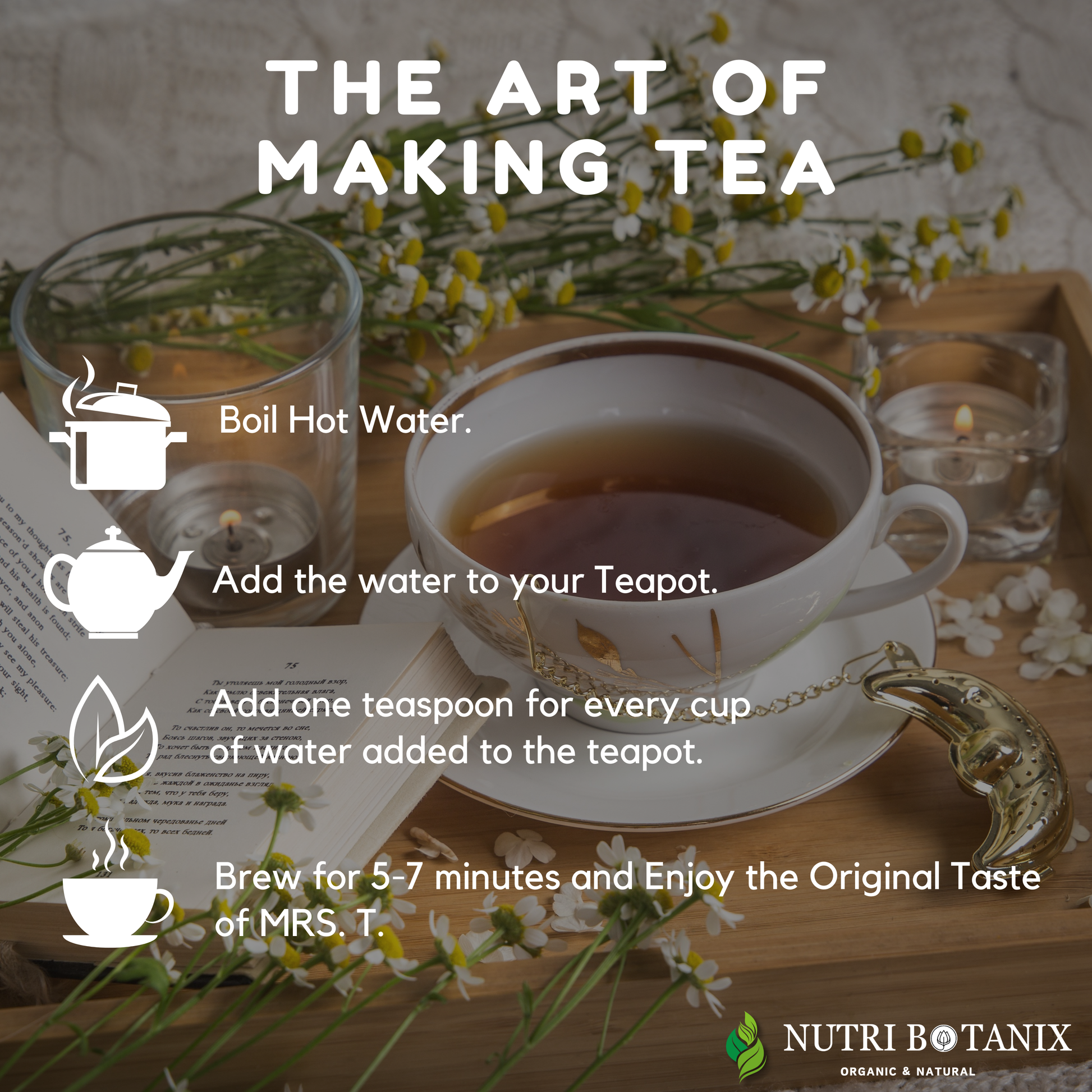
- Amount: 1–1.5 teaspoons per 8 oz of water
- Water temperature: 200–208°F (near boiling)
- Steep time: 5–7 minutes
- Vessel: Infuser basket, muslin bag, or French press
Herbal blends generally benefit from slightly higher water temperatures and longer steep times than green or white teas. The spearmint and fennel will be prominent at shorter steeps; shatavari and fenugreek deepen with longer contact time. Adjust to taste. This blend also works well as a cold brew — steep in room temperature water for 8–10 hours and serve over ice for a bright, refreshing herbal cup.
Honey Pairings
This blend pairs well with pure varietal honeys that complement its aromatic, herbal character without competing with the fennel and spearmint brightness.
Wildflower Honey — Wildflower honey varies by region and season, reflecting the diversity of blossoms available to the bees at the time of harvest. It tends toward a fuller, more complex sweetness than single-varietal honeys — floral, sometimes fruity, with a depth that varies from batch to batch. That complexity pairs naturally with a multi-botanical herbal blend like Mrs. T Tea, where the honey's character shifts depending on which botanical notes dominate the steep.
Orange Blossom Honey — Harvested from the blossoms of citrus groves, Orange Blossom Honey has a light floral character with a mild citrus undertone. It pairs beautifully with the spearmint and fennel in this blend, adding a bright, clean sweetness that lifts the aromatic top notes without adding weight. A good choice for those who prefer a lighter, more delicate sweetness.
Related Products
- MR. T Tea — The companion blend in the T Series. Built around Ashwagandha, Shatavari, and Gokhru — deeper, earthier, and anchored in green tea.
- Vitality Balance Tea — A caffeine-free botanical blend featuring Tulsi alongside Gymnema, Pipli, and Rooibos.
- 5 O'Clock Fighter Tea — An Ayurvedic botanical blend featuring Ashwagandha, Brahmi, Tulsi, and Elderberry.
Frequently Asked Questions
What does "Mrs. T" mean?
Mrs. T is a character name — companion to MR. T in the T Series. Like MR. T, it's bold and direct. It's not gender-coded and this tea is for anyone. The name reflects the character of the blend: bright, grounded, and unapologetically itself.
Is this tea caffeine-free?
Yes. Mrs. T Tea contains no Camellia sinensis — no green tea, black tea, white tea, or oolong. Every ingredient is an herbal botanical or culinary spice. This blend is caffeine-free by composition and can be enjoyed at any time of day.
What is Shatavari?
Shatavari (Asparagus racemosus) is a classical Ayurvedic Rasayana botanical documented in texts including the Charaka Samhita. It has been part of Ayurvedic formulations for centuries and appears in both Mrs. T Tea and its companion MR. T Tea as one of the core classical botanicals. It contributes a subtle, slightly sweet character to the blend.
What does Tulsi taste like in this blend?
Tulsi has a complex flavor — clove-like, slightly peppery, with a floral sweetness that sits between basil and clove. In this blend, it works with fennel and cinnamon to create the aromatic opening of the cup. Its character is more noticeable at shorter steep times and integrates more deeply into the overall blend with longer steeps.
What does fenugreek contribute to the flavor?
Fenugreek has a distinctive warm, slightly bitter, maple-like depth that is immediately recognizable to anyone familiar with South Asian cooking. It's a background note in this blend rather than a dominant flavor, but it contributes the grounding culinary character that distinguishes Mrs. T Tea from a purely aromatic herbal blend.
How much tea do I use per cup?
1 to 1.5 teaspoons per 8 oz of water, steeped near boiling (200–208°F) for 5–7 minutes. Adjust to taste.
The botanical and cultural information provided on this page is for educational purposes only. For personalized guidance on any botanical ingredient, consult a qualified Ayurvedic practitioner or licensed healthcare provider.
These statements have not been evaluated by the Food and Drug Administration. This product is not intended to diagnose, treat, cure, or prevent any disease.
Share