Traditional Use & Responsible Guidance
Traditional Use & Responsible Guidance
Product information is provided for educational and culinary purposes. Traditional use does not establish medical effectiveness. These products are not intended to diagnose, treat, cure, or prevent disease. Review ingredients and product-specific cautions; consult a qualified professional if pregnant, nursing, taking medication, managing a condition, or unsure whether a product is appropriate.
NutriBotanix
Mr. T Tea
Mr. T Tea
Couldn't load pickup availability
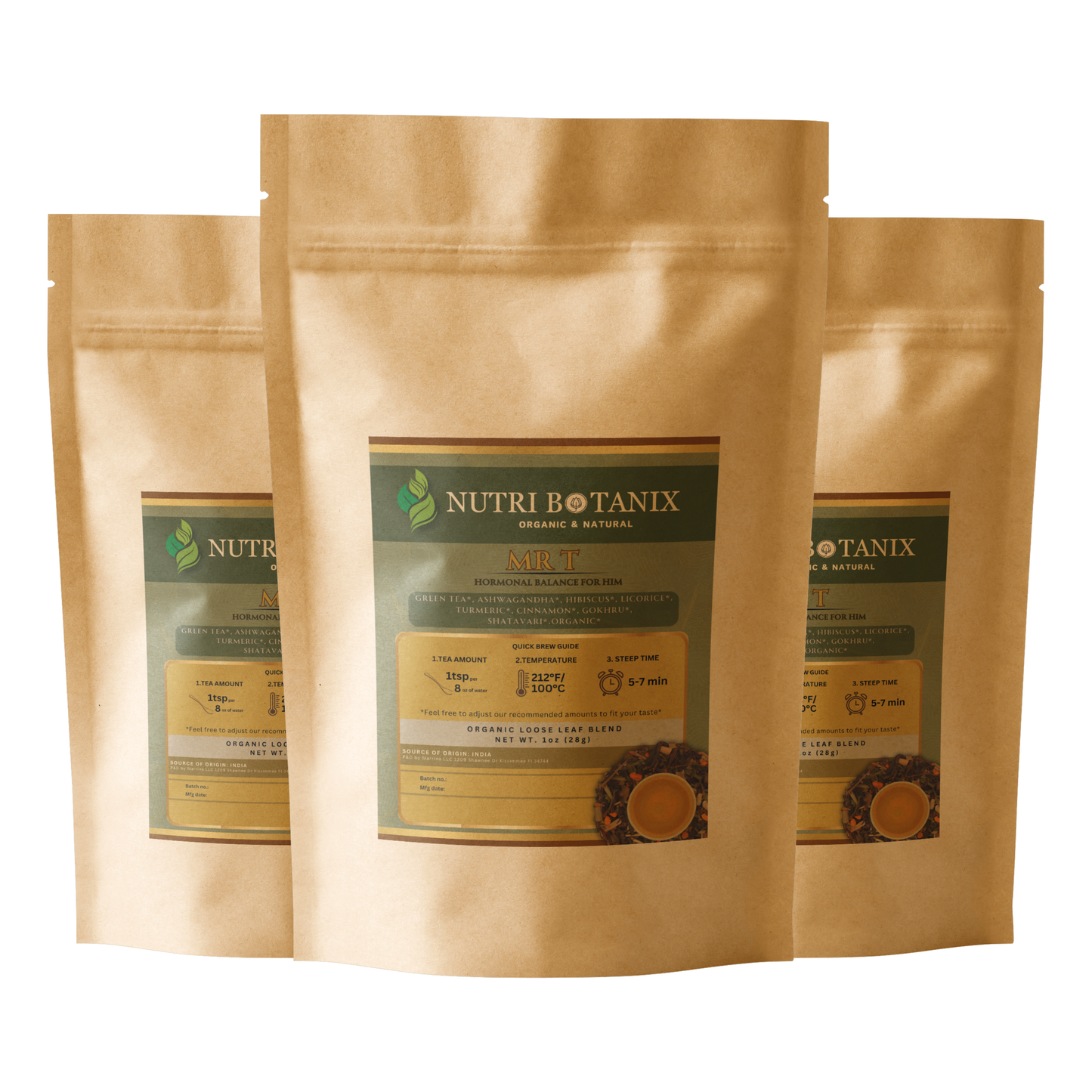
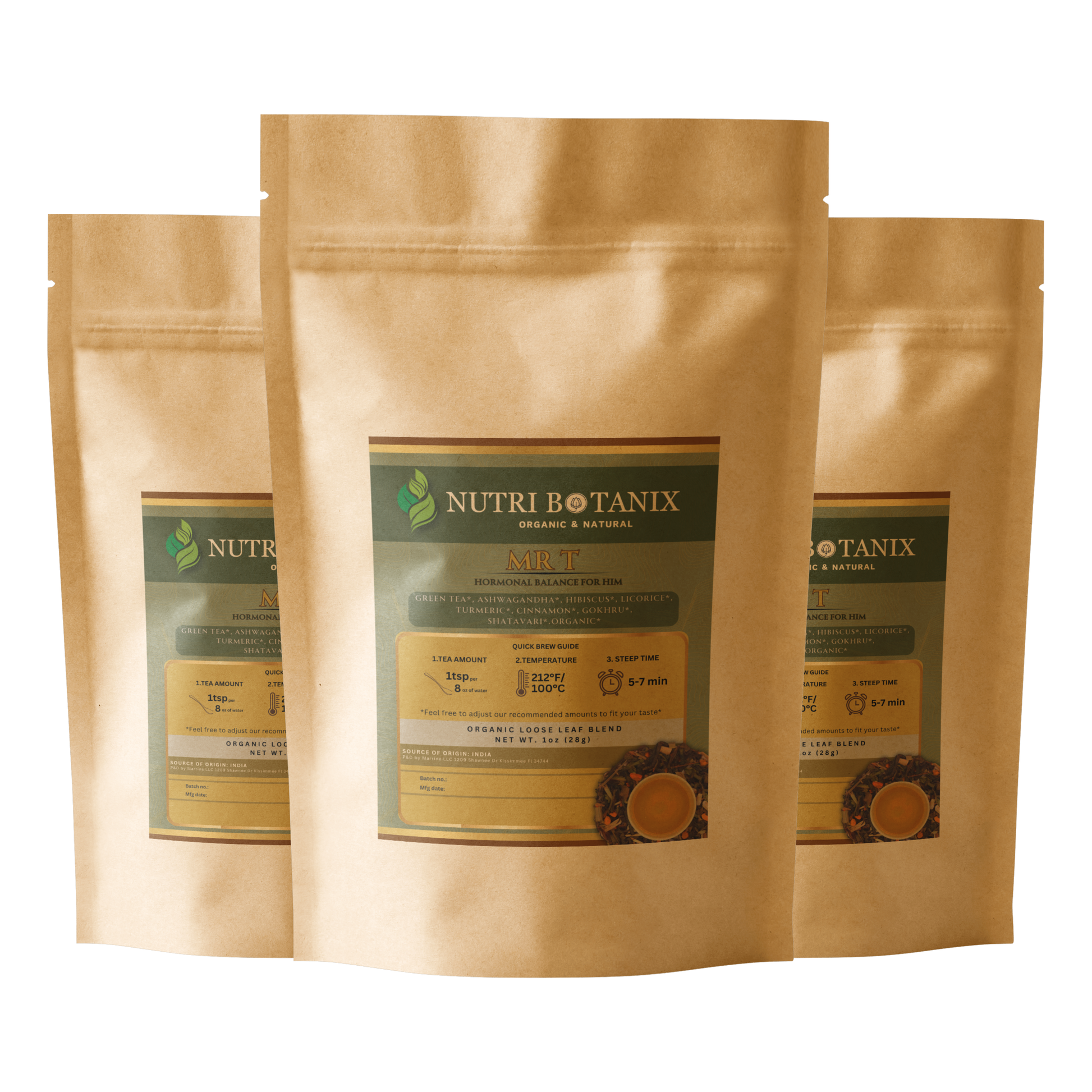
MR. T Tea is built around three classical Rasayana botanicals — Ashwagandha, Shatavari, and Gokhru — each documented in Ayurvedic texts for centuries and brought together here in a grounding, aromatic loose leaf blend. Warm cinnamon, earthy turmeric, and smooth licorice root round out the formula, while hibiscus gives the cup its deep, jewel-toned color. This is a tea for anyone drawn to the depth of classical Ayurvedic botanical tradition.
The Botanicals
Ashwagandha Root (Withania somnifera)
Ashwagandha — Sanskrit for "smell of the horse" — is one of the most foundational plants in Ayurvedic classical medicine. Documented in the Charaka Samhita and Sushruta Samhita, it holds a central place in the Rasayana tradition: a category of Ayurvedic practice concerned with nourishment, longevity, and the cultivation of vitality over time. Botanically, it is a member of the nightshade family (Solanaceae), native to the drier regions of India, North Africa, and the Mediterranean. The root is earthy and slightly bitter, with a depth that anchors the base of this blend.
Shatavari Root (Asparagus racemosus)
Shatavari is a climbing plant of the asparagus family, native to the forests and grasslands of India and the Himalayas. Its Sanskrit name — loosely translated as "she who possesses a hundred roots" — reflects its deep presence in Ayurvedic botanical literature. It appears extensively in classical texts including the Charaka Samhita, where it is recognized as a Rasayana botanical of significant standing. The root contributes a subtle, slightly sweet note to this blend and has been used in Ayurvedic formulations for generations across South Asia.
Gokhru / Gokshura (Tribulus terrestris)
Gokhru — also known by its classical Sanskrit name Gokshura, meaning "cow's hoof" in reference to the shape of its seed pods — is a sprawling annual plant found across tropical and subtropical regions worldwide. In Ayurvedic classical literature, particularly the Ashtanga Hridayam, Gokhru is classified as a Rasayana botanical of notable standing. It has been part of traditional Ayurvedic formulations for centuries, valued in classical practice as a grounding, nourishing botanical. Gokhru brings a mild, earthy character to this blend and completes the classical Rasayana botanical triad at the heart of MR. T Tea.
Turmeric (Curcuma longa)
Turmeric is one of the most culturally significant plants in South and Southeast Asian history — a rhizome used in cooking, ceremony, medicine, and textile dyeing for over four thousand years. Native to the Indian subcontinent, it appears in Ayurvedic texts under the name Haridra and has been traded along ancient spice routes connecting India to the Middle East, East Africa, and Southeast Asia. In this blend, turmeric contributes its characteristic warm, slightly peppery depth and golden color to the cup.
Cinnamon (Cinnamomum verum)
True cinnamon — Cinnamomum verum, sometimes called Ceylon cinnamon — has been one of the most prized spice trade commodities in history, originating in Sri Lanka and traveling ancient trade routes into the Arab world, Egypt, and eventually Europe. In South Asian culinary and botanical tradition, cinnamon is a warming spice used across a wide range of preparations. In this blend, it adds aromatic sweetness and a gentle warmth that bridges the earthier Rasayana botanicals with the lighter hibiscus notes.
Licorice Root (Glycyrrhiza glabra)
Licorice root has been used in botanical traditions across Asia, the Middle East, and Europe for thousands of years. In Ayurvedic tradition, it appears as Yashtimadhu — Sanskrit for "sweet wood" — and is referenced in classical texts as a smoothing, harmonizing botanical often used in compound formulas. The root's characteristic gentle sweetness comes from glycyrrhizin, a compound significantly sweeter than cane sugar. In this blend, licorice root softens the bitter edges of ashwagandha and turmeric, creating a rounder, more cohesive cup.
Green Tea (Camellia sinensis)
Green tea provides the botanical base of this blend — light, clean, and grassy, it carries the other ingredients without overwhelming them. Camellia sinensis has been cultivated for tea across China, Japan, India, and East Africa for millennia. As a lightly oxidized tea, it retains more of the plant's natural character than black or oolong varieties. It contains naturally occurring caffeine, which is moderated here by the volume of other botanicals in the blend. This is a lower-caffeine tea by composition.
Hibiscus (Hibiscus sabdariffa)
Hibiscus sabdariffa — the Roselle variety used in teas — has a long culinary and botanical history across West Africa, the Caribbean, South Asia, and Latin America. Known as Agua de Jamaica in Mexico, Bissap in Senegal, Karkadé in Egypt, and Gongura in parts of India, hibiscus calyces have been brewed into tart, vivid drinks across cultures for centuries. In this blend, hibiscus contributes its signature ruby-red color and bright, cranberry-like tartness — a striking visual and flavor counterpoint to the warm, earthy botanicals.
About This Blend
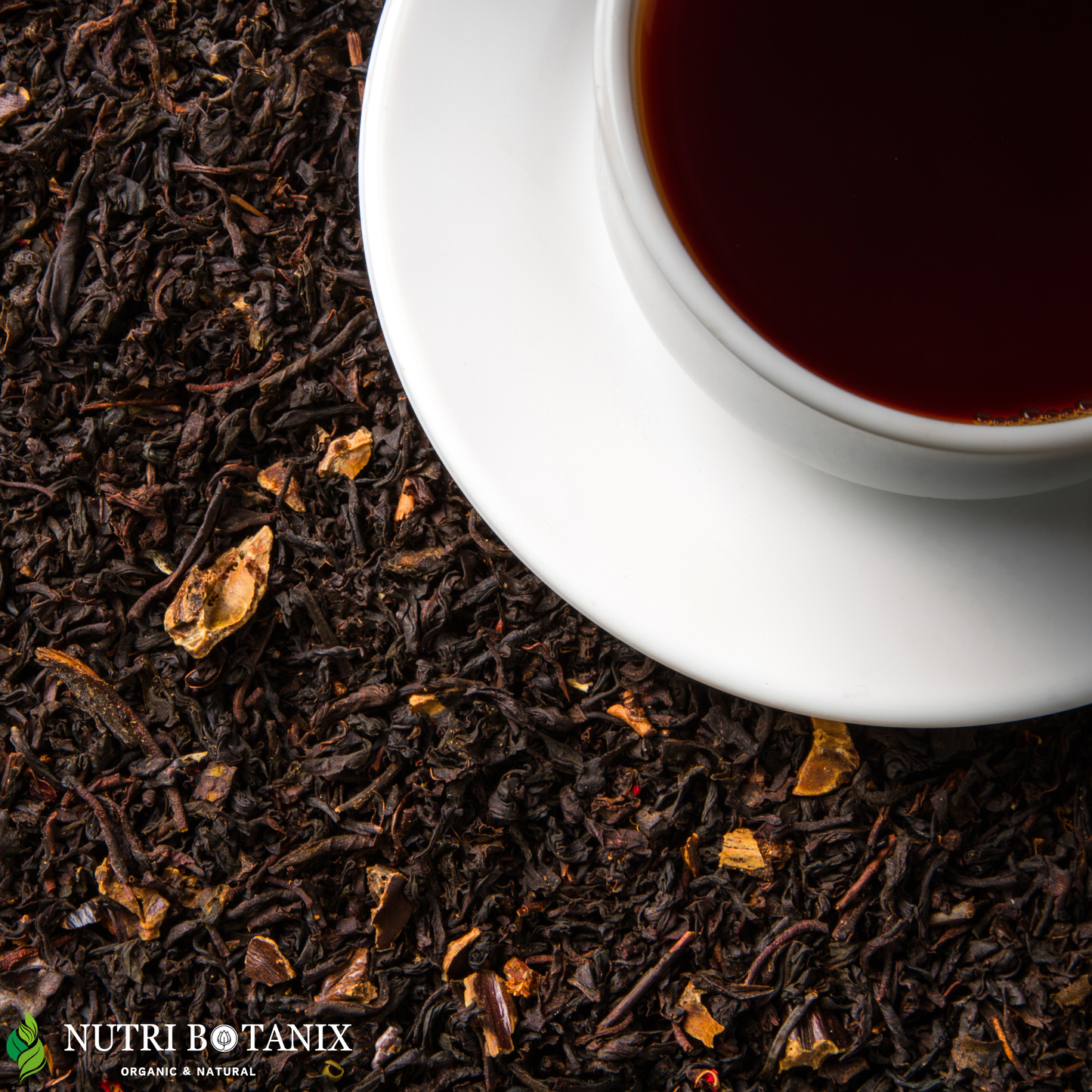
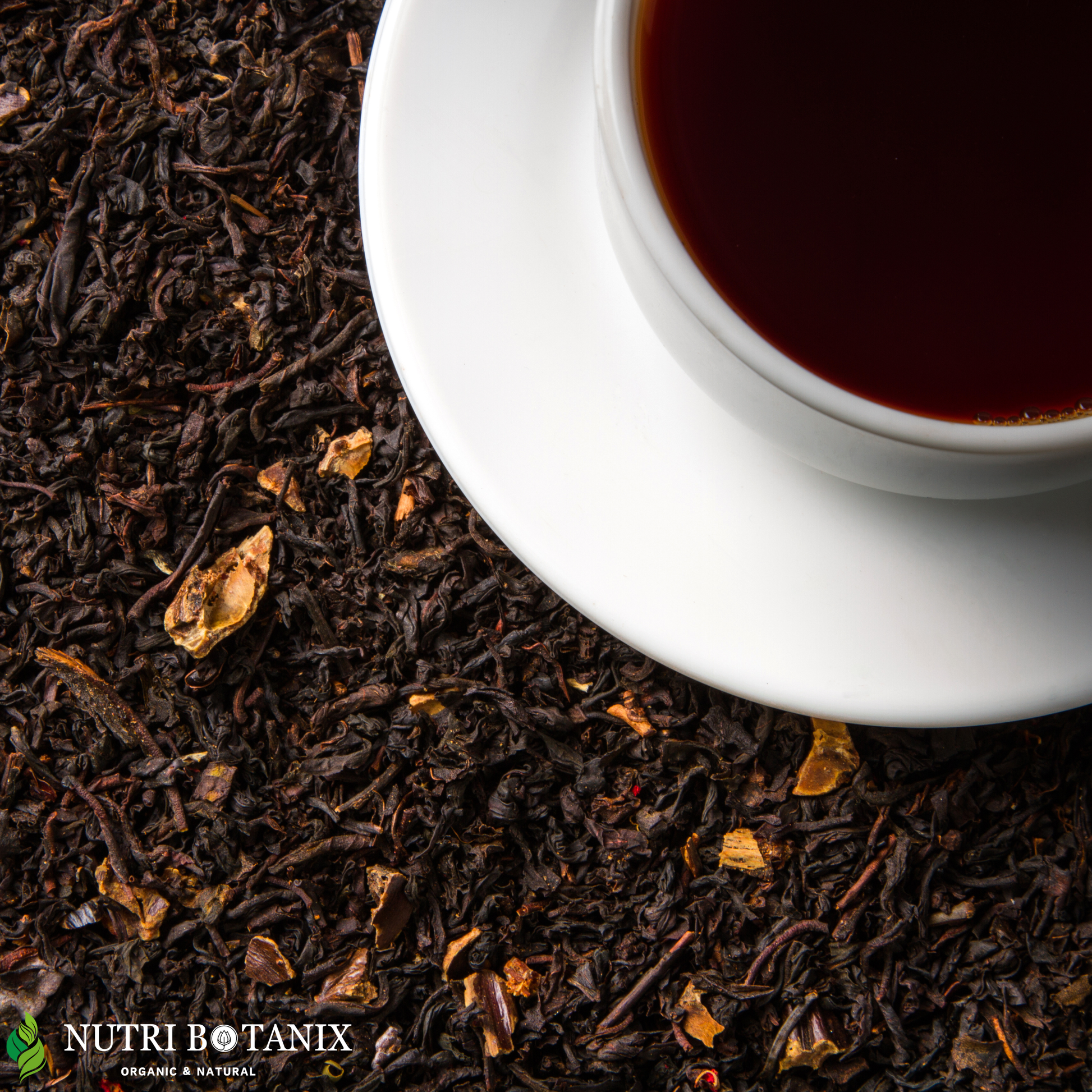
MR. T Tea is a full-bodied, multi-botanical loose leaf blend rooted in classical Ayurvedic Rasayana tradition. The three classical Rasayana botanicals — Ashwagandha, Shatavari, and Gokhru — form the botanical core of the formula, supported by turmeric, cinnamon, licorice root, green tea, and hibiscus. The result is a complex cup: earthy and warm at the base, lightly sweet through the middle, with a bright hibiscus finish. It brews to a deep ruby with orange undertones and carries the aromatic depth of South Asian botanical tradition.
This is a tea for those who are drawn to the depth of Ayurvedic practice and want to engage with its classical botanical tradition through a daily ritual.
Brewing Instructions
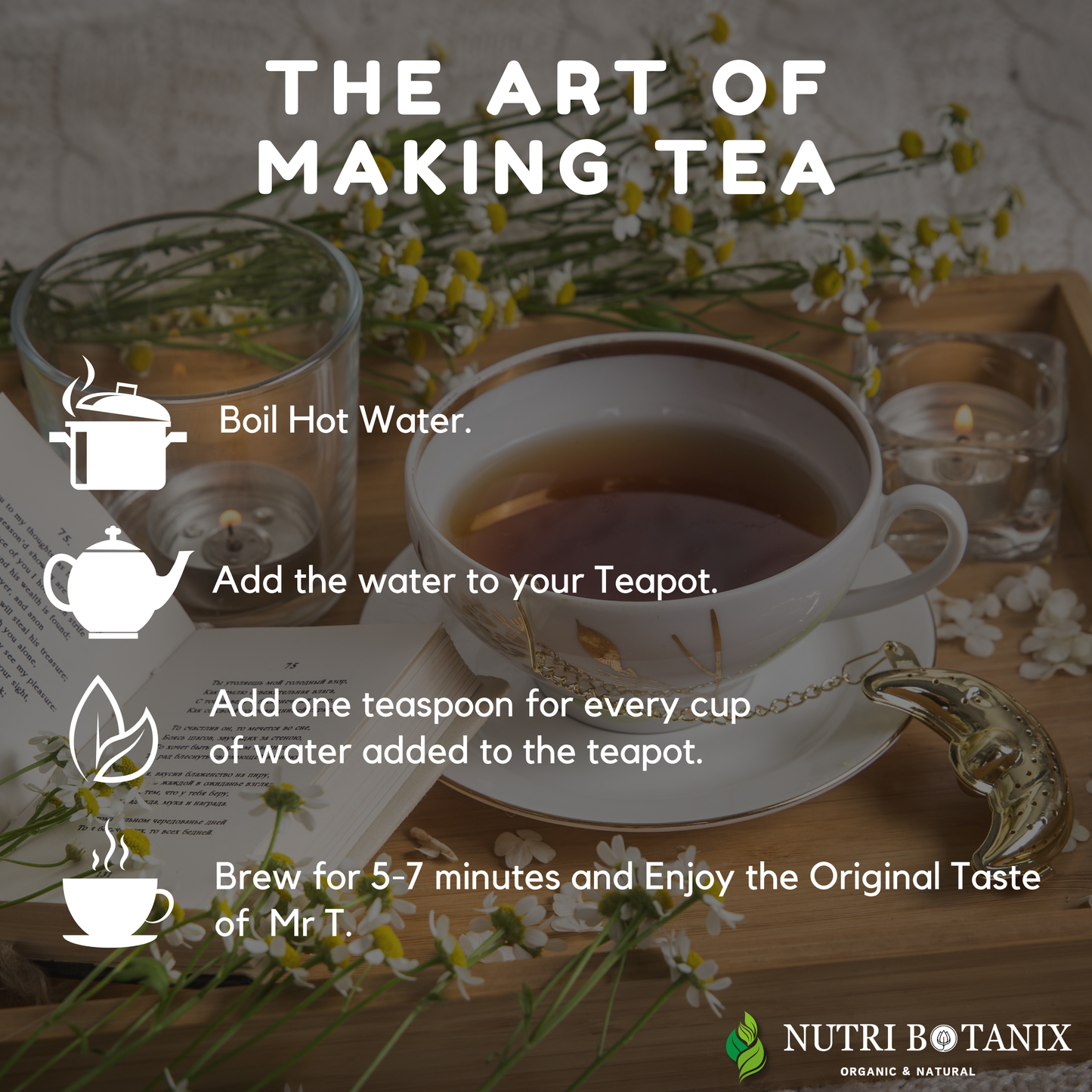
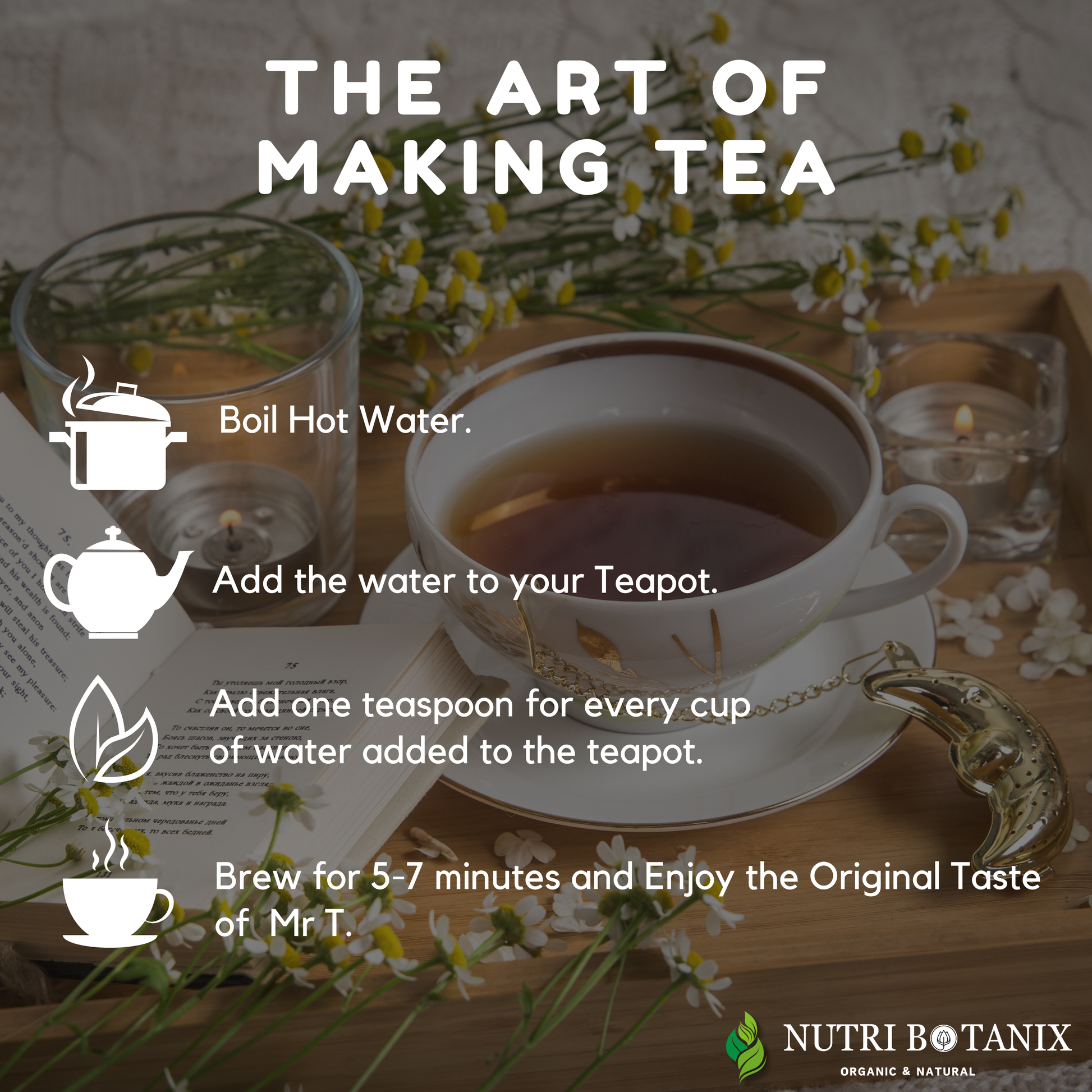
- Amount: 1–1.5 teaspoons per 8 oz of water
- Water temperature: 185–195°F (just below boiling)
- Steep time: 4–6 minutes
- Vessel: Infuser basket, muslin bag, or French press
For a stronger cup, increase leaf amount rather than steep time. The licorice root and cinnamon intensify with longer steeps; start at 4 minutes and adjust to taste. This blend also works well as a cold brew — steep in room temperature water for 8–10 hours and serve over ice.
Honey Pairings
This blend pairs well with pure varietal honeys that complement its earthy, warming profile without competing with the botanical complexity.
Sourwood Honey — Sourwood is a light, delicate honey with a distinctive caramel-like sweetness and subtle anise finish, harvested from the blossoms of the sourwood tree (Oxydendrum arboreum) in the Appalachian highlands. Its clean sweetness integrates with the licorice root and cinnamon in this blend without overpowering the earthy Rasayana botanicals, making it an ideal pairing for anyone who wants a touch of sweetness without disrupting the depth of the cup.
Orange Blossom Honey — Harvested from the blossoms of citrus groves, Orange Blossom Honey has a light floral character with a mild citrus undertone. It provides a bright counterpoint to the earthier notes in MR. T Tea, lifting the hibiscus finish and adding aromatic complexity without weight. A good choice for those who prefer a lighter, more floral sweetness.
Brewing Tools
The right tools make loose leaf tea simple.
- Unbleached Disposable Tea Bags — Single-use, unbleached, chlorine-free. Fill, steep, discard. No strainer required.
- Heart-Shaped Tea Infuser — Reusable stainless-steel infuser for everyday loose-leaf brewing. Fits standard mugs and teacups.
Related Products
- Mrs. T Tea — A companion blend in the T Series, also rooted in Ayurvedic botanical tradition.
- 5 O'Clock Fighter Tea — An Ayurvedic botanical blend featuring Ashwagandha alongside Brahmi, Tulsi, and Elderberry.
- Sluggishness Crusher Tea — A cross-cultural botanical blend drawing from Ayurvedic, European, and traditional food traditions.
Frequently Asked Questions
What does "MR. T" mean?
MR. T is a character name — bold, direct, no-nonsense. It's not gender-coded and this tea is for anyone. The name reflects the straightforward confidence of the formula: three classical Rasayana botanicals, no filler, no compromise.
What is Gokhru, and why is it in this tea?
Gokhru (Tribulus terrestris), also called Gokshura in Sanskrit, is a classical Ayurvedic Rasayana botanical documented in texts including the Ashtanga Hridayam. It has been part of Ayurvedic formulations for centuries and completes the classical Rasayana botanical triad alongside Ashwagandha and Shatavari. It contributes a mild, earthy character to the cup. If you have specific health questions about any ingredient in this blend, we recommend consulting a qualified Ayurvedic practitioner or healthcare provider.
What is Shatavari?
Shatavari (Asparagus racemosus) is a classical Ayurvedic Rasayana botanical native to India and the Himalayas. It appears extensively in ancient Ayurvedic texts and has been used in South Asian botanical tradition for generations. It contributes a subtle sweetness to this blend and is one of three core Rasayana botanicals in the formula.
Does this tea contain caffeine?
Yes. This blend contains green tea, which contributes naturally occurring caffeine. The volume of other botanicals in the formula means the caffeine content is lower than a standard cup of green tea, but it is not caffeine-free.
How much tea do I use per cup?
1 to 1.5 teaspoons per 8 oz of water, steeped at 185–195°F for 4–6 minutes. Adjust to taste.
These statements have not been evaluated by the Food and Drug Administration. This product is not intended to diagnose, treat, cure, or prevent any disease. The botanical and cultural information provided is for educational purposes only. For personalized guidance, consult a qualified Ayurvedic practitioner or licensed healthcare provider.
Share