
Traditional Use & Responsible Guidance
Traditional Use & Responsible Guidance
Product information is provided for educational and culinary purposes. Traditional use does not establish medical effectiveness. These products are not intended to diagnose, treat, cure, or prevent disease. Review ingredients and product-specific cautions; consult a qualified professional if pregnant, nursing, taking medication, managing a condition, or unsure whether a product is appropriate.
NutriBotanix
Healthy Glow Tea
Healthy Glow Tea
Couldn't load pickup availability
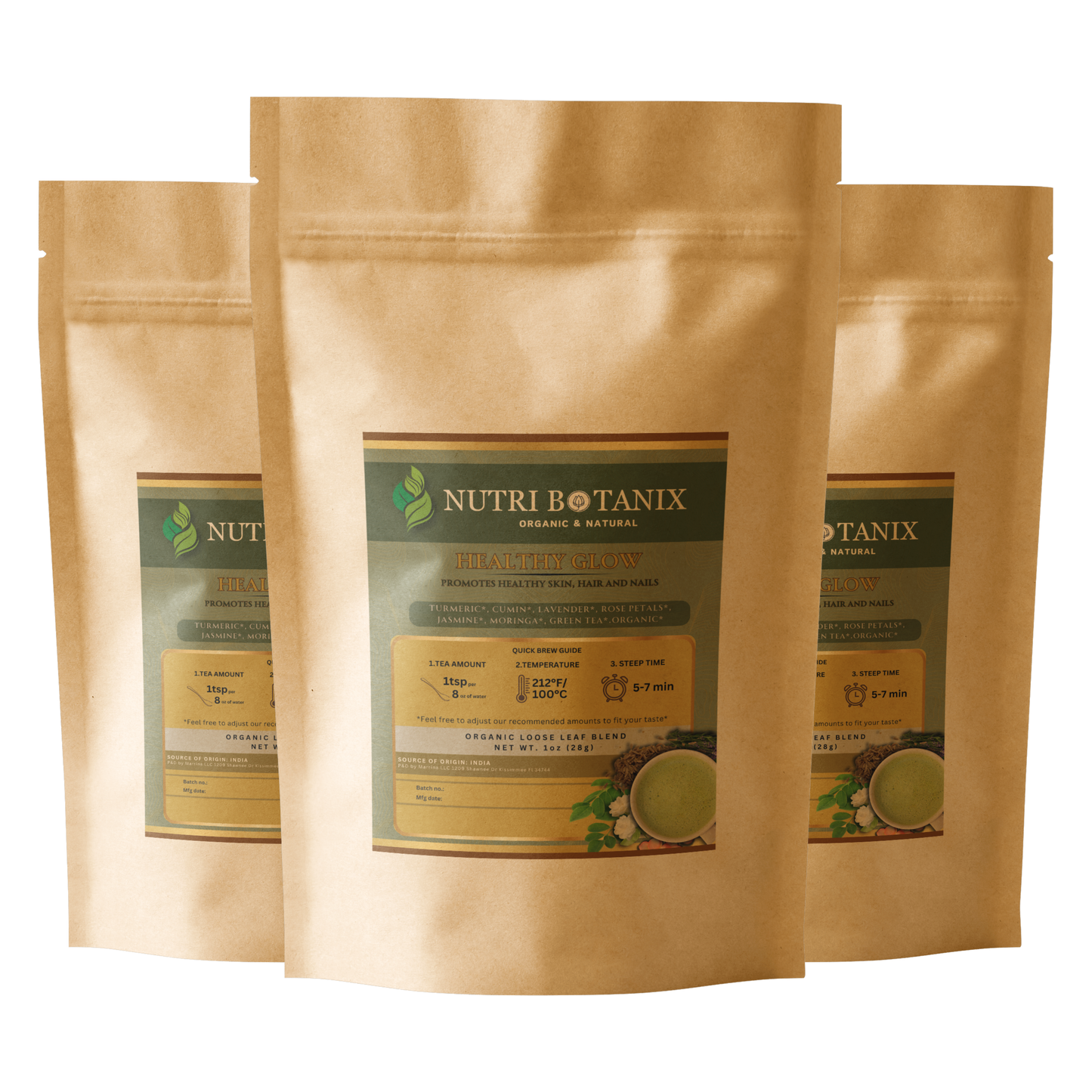
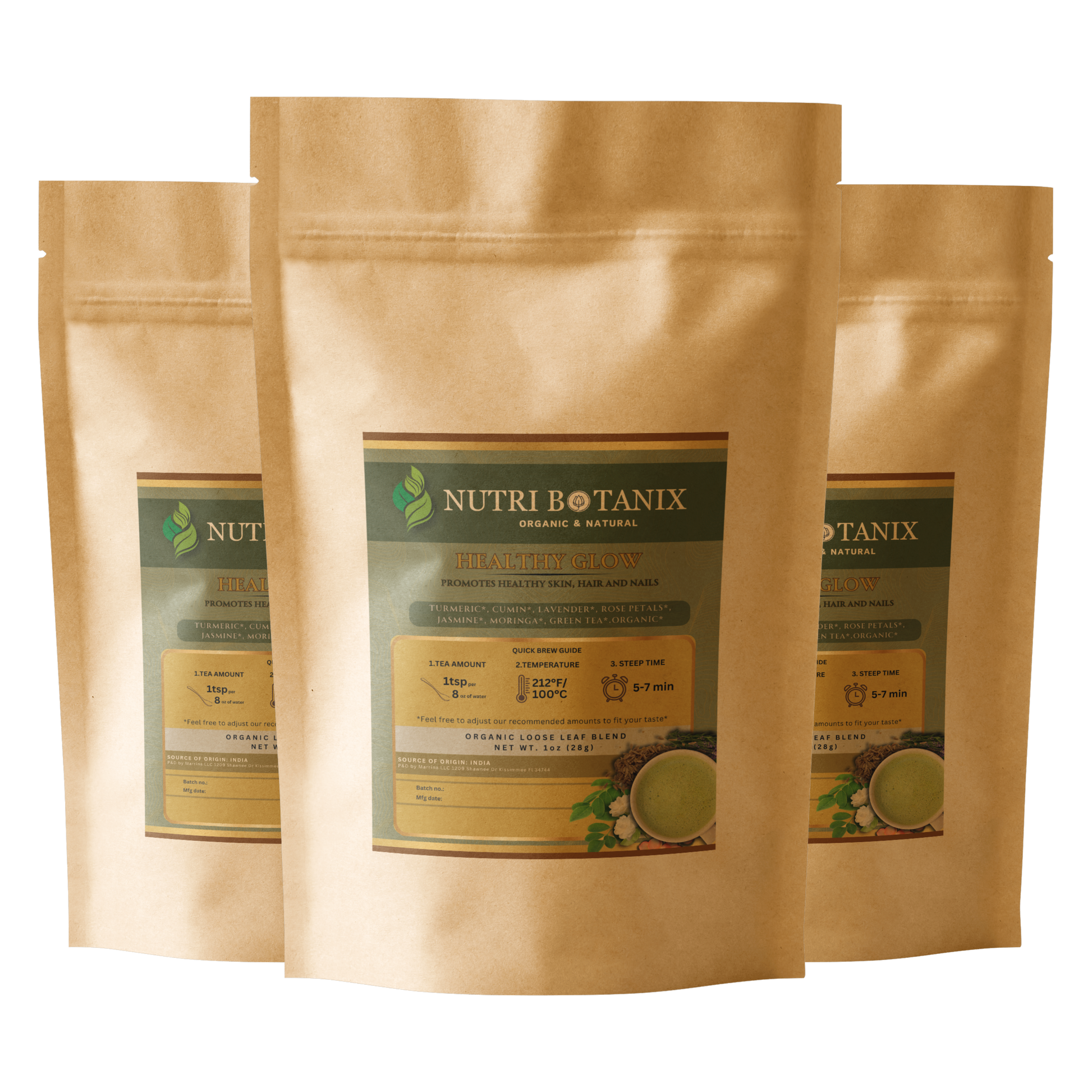
Healthy Glow Tea is a floral-aromatic botanical blend inspired by Persian rose traditions, South Asian botanical culture, and East Asian tea heritage. Rose petals, jasmine flowers, and lavender give this cup its distinctive floral character — layered over the warm, golden depth of turmeric and cumin, grounded by moringa leaf, and carried on a base of green tea. This is a blend for anyone drawn to the aromatic complexity of botanical teas with roots in some of the world’s oldest floral and spice traditions.
Contains green tea and naturally occurring caffeine.
The Botanicals
Rose Petals (Rosa damascena)
The Damask rose — Rosa damascena — has one of the longest and most documented histories of any flower in human culture. Originating in the ancient Near East and cultivated extensively in Persia, it became the foundation of a vast tradition of rose water, rose oil, and rose-based culinary preparations that spread through the Mughal Empire into South Asia and across the Arab world into North Africa and Andalusia. In Persian and Mughal court cuisine, rose petals were used in sweets, rice dishes, sherbet, and teas. In this blend, dried rose petals contribute a delicate, fragrant floral note — sweet and slightly tart — that forms the aromatic heart of the cup.
Jasmine Flowers (Jasminum sambac)
Jasmine has been cultivated across South and East Asia for centuries, with deep cultural roots in India, China, and Southeast Asia. In Chinese tea tradition, jasmine blossoms have been used to scent green tea since at least the Song Dynasty (960–1279 CE), producing one of the most widely consumed scented teas in the world. In South Asian tradition, jasmine flowers are woven into garlands, offered at temples, and used in ceremonial preparations. In this blend, dried jasmine flowers contribute their characteristic sweet, heady floral fragrance — one of the most immediately recognizable aromas in botanical tea culture.
Lavender (Lavandula angustifolia)
Lavender is native to the Mediterranean basin and has been cultivated across southern Europe, North Africa, and the Middle East for thousands of years. The Romans used it extensively in bathing and cooking; medieval European apothecaries grew it in physic gardens; and French Provençal cuisine has incorporated lavender into culinary preparations for centuries. In botanical tea culture, dried lavender buds contribute a distinctly aromatic, slightly herbal floral note — more complex and resinous than rose or jasmine, with a character that bridges the floral and herbal registers of this blend.
Turmeric (Curcuma longa)
Turmeric is one of the most culturally significant plants in South and Southeast Asian history — a rhizome used in cooking, ceremony, medicine, and textile dyeing for over four thousand years. Native to the Indian subcontinent, it appears in Ayurvedic texts under the name Haridra and has been traded along ancient spice routes connecting India to the Middle East, East Africa, and Southeast Asia. In this blend, turmeric contributes its characteristic warm, slightly peppery depth and golden color — a grounding counterpoint to the lighter floral notes that define the top of the cup.
Moringa (Moringa oleifera)
Moringa is a fast-growing tree native to the foothills of the Himalayas in northern India, now cultivated across tropical regions from West Africa to the Philippines and Central America. Known in India as the “drumstick tree” for the shape of its seed pods, moringa leaves, flowers, and pods have been part of South Asian, East African, and Southeast Asian food culture for generations — used in curries, soups, and daily meals long before the plant attracted international attention. In this blend, moringa leaf contributes a mild, grassy botanical character that adds depth and body to the cup without competing with the floral notes.
Green Tea (Camellia sinensis)
Green tea provides the botanical base of this blend — light, clean, and grassy, it carries the floral and spice ingredients without overwhelming them. Camellia sinensis has been cultivated for tea across China, Japan, India, and East Africa for millennia. As a lightly oxidized tea, it retains more of the plant’s natural character than black or oolong varieties, making it a natural vehicle for floral botanical blends. It contains naturally occurring caffeine.
Cumin (Cuminum cyminum)
Cumin is one of the oldest cultivated spices in the world, with evidence of its use in ancient Egypt and Mesopotamia dating back over four thousand years. It spread through the ancient spice trade into South Asia, the Mediterranean, and eventually the Americas, where it became foundational to Mexican and Tex-Mex cooking. In South Asian and Middle Eastern culinary tradition, cumin is a cornerstone spice — used whole, toasted, or ground in a vast range of preparations. In this blend, cumin contributes a warm, earthy, lightly smoky depth that grounds the floral notes and adds complexity to the mid-palate.
About This Blend
Healthy Glow Tea draws from three distinct botanical traditions — Persian rose culture, South Asian jasmine and spice heritage, and East Asian green tea practice — and brings them together in a single aromatic cup. Rose petals and jasmine flowers give the blend its primary floral identity. Lavender adds a Mediterranean herbal complexity that sits between floral and aromatic. Turmeric and cumin anchor the base with warm spice depth, and moringa contributes a grassy botanical body that fills the mid-cup. Green tea ties it together: light enough not to compete, present enough to give the blend structure.
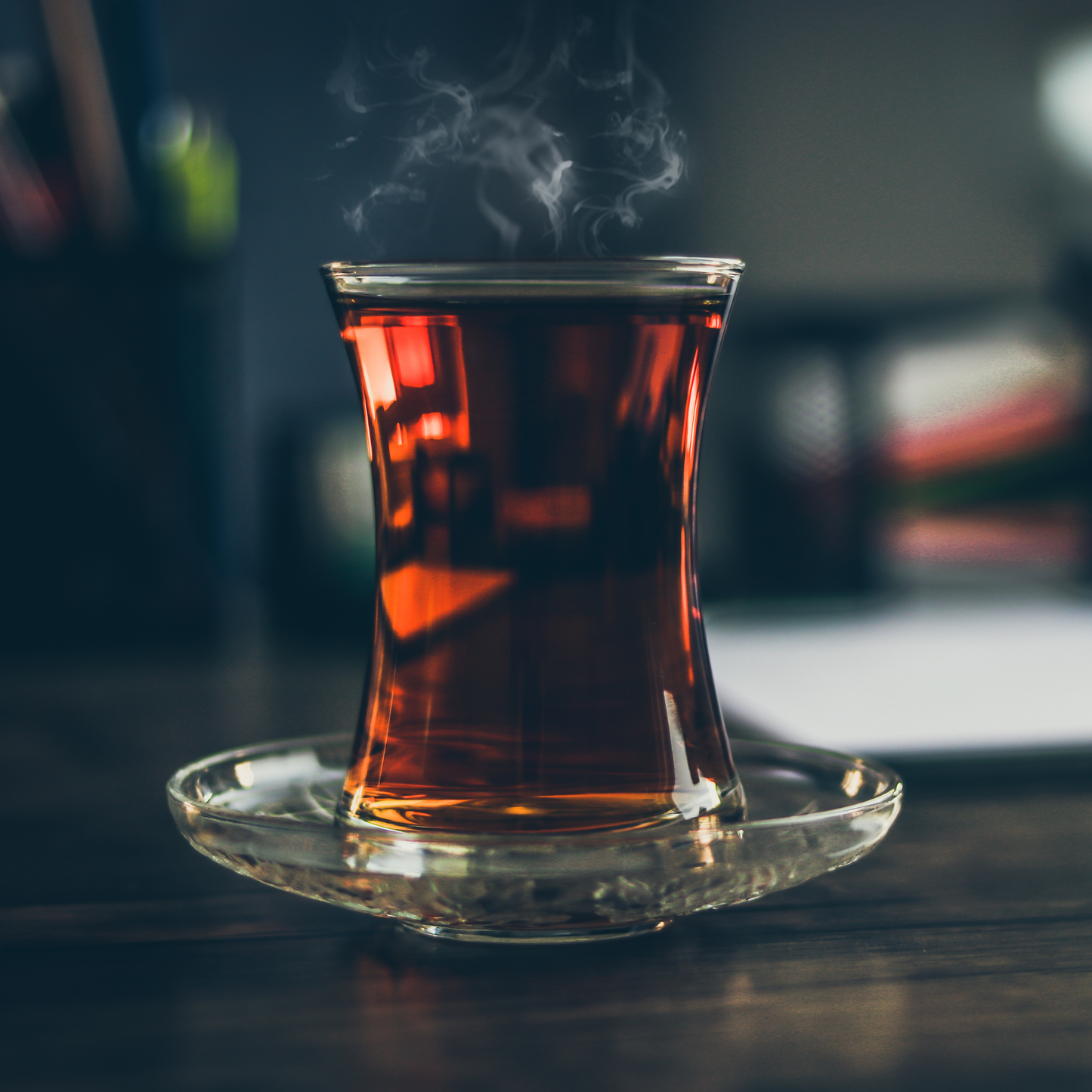
This is the most distinctly floral tea in the NutriBotanix catalog — a cup defined by layered aromatic complexity rather than a single dominant note. It brews to a warm amber-gold, carrying jasmine and rose in the top notes, turmeric warmth through the body, and a clean green tea finish.
Brewing Instructions
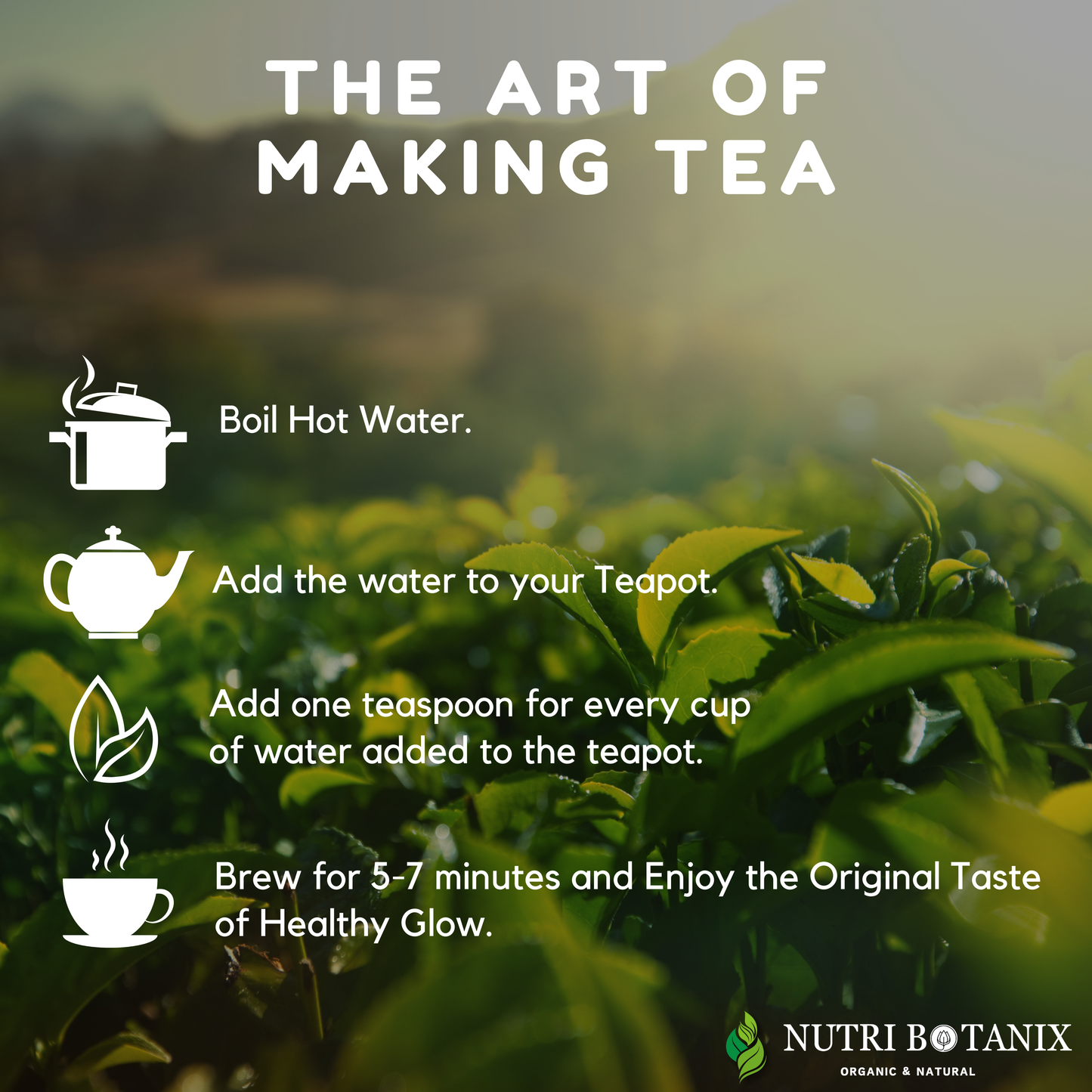
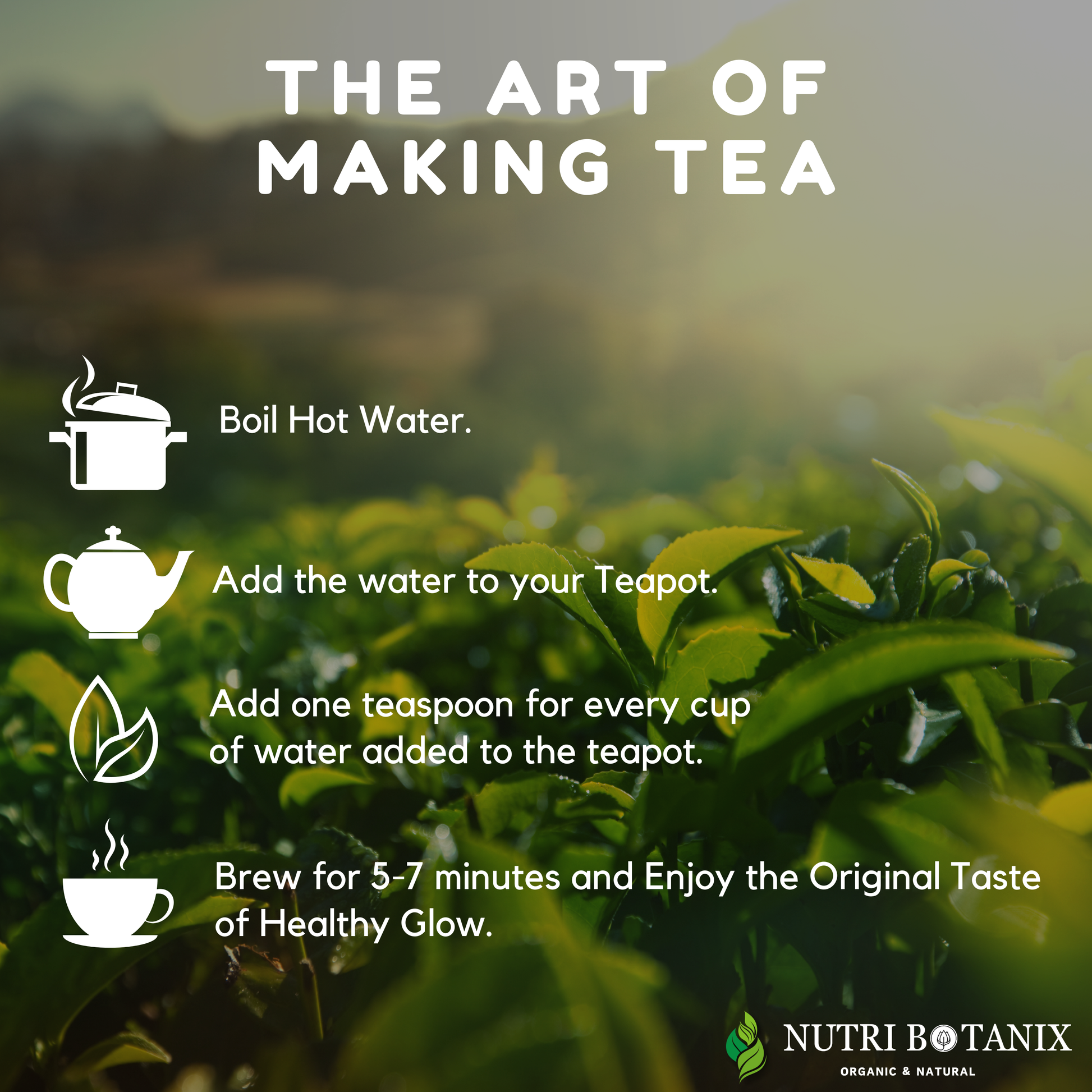
- Amount: 1–1.5 teaspoons per 8 oz of water
- Water temperature: 175–185°F (well below boiling)
- Steep time: 3–5 minutes
- Vessel: Infuser basket, muslin bag, or French press
Floral botanicals are sensitive to high heat — water above 190°F can mute the rose and jasmine notes and introduce bitterness from the green tea base. Keep the temperature in the 175–185°F range and start with a 3-minute steep, adjusting upward to taste. The turmeric and cumin deepen slightly with longer steeps. This blend also works well cold-brewed — steep in room temperature water for 6–8 hours for a delicate, aromatic iced tea that preserves the floral character well.
Honey Pairings
This blend pairs best with pure varietal honeys that echo or complement its floral aromatic character.
Orange Blossom Honey — Harvested from the blossoms of citrus groves, Orange Blossom Honey has a light floral character with a mild citrus undertone. It is the natural pairing for a floral tea blend: its own floral sweetness echoes the rose and jasmine notes in the cup, while the citrus lift brightens the turmeric warmth in the base. Clean, elegant, and aromatic — it integrates into this blend without adding weight.
Wildflower Honey — Wildflower honey varies by region and season, reflecting the diversity of blossoms available to the bees at the time of harvest. Its fuller, more complex sweetness — floral, sometimes fruity, with depth that shifts batch to batch — pairs naturally with the layered aromatic complexity of this blend. A good choice for those who want more honeyed depth alongside the florals.
Related Products
- Refine Tea — A Persian and Mughal-inspired floral botanical blend featuring rose petals and cardamom as the aromatic signature.
- Mrs. T Tea — A caffeine-free Ayurvedic botanical herbal blend with Shatavari, Tulsi, and a bright herbal character.
- Natural Nurture Tea — A hibiscus-forward botanical blend with moringa, ashwagandha, and turmeric in a bright, ruby-red cup.
Frequently Asked Questions
What does this tea taste like?
The top notes are floral — jasmine and rose are the most immediately present aromas, with lavender adding a herbal-floral complexity underneath. Through the middle of the cup, turmeric and cumin add warm, earthy depth. The green tea base is light and clean, providing structure without bitterness when brewed at the recommended temperature. It is distinctly aromatic rather than sweet, though the floral notes can read as gently sweet depending on the steep time.
Does this tea contain caffeine?
Yes. This blend contains green tea, which contributes naturally occurring caffeine.
Why is the water temperature lower than boiling?
Floral botanicals — particularly rose petals and jasmine — are aromatic and delicate. Boiling water can mute their fragrance and introduce bitterness from the green tea base. Brewing at 175–185°F preserves the floral character and produces a cleaner, brighter cup.
Can I cold-brew this tea?
Yes, and it works particularly well cold. Steep in room temperature water for 6–8 hours. Cold brewing pulls the floral notes forward and produces a very clean, aromatic iced tea. The turmeric color comes through beautifully over ice.
How much tea do I use per cup?
1 to 1.5 teaspoons per 8 oz of water, at 175–185°F, for 3–5 minutes. Adjust to taste.
The botanical and cultural information provided on this page is for educational purposes only. For personalized guidance on any botanical ingredient, consult a qualified Ayurvedic practitioner or licensed healthcare provider.
These statements have not been evaluated by the Food and Drug Administration. This product is not intended to diagnose, treat, cure, or prevent any disease.
Share