

NutriBotanix
Amla Capsules — Organic Indian Gooseberry | Ayurvedic Rasayana | NutriBotanix
Amla Capsules — Organic Indian Gooseberry | Ayurvedic Rasayana | NutriBotanix
Couldn't load pickup availability
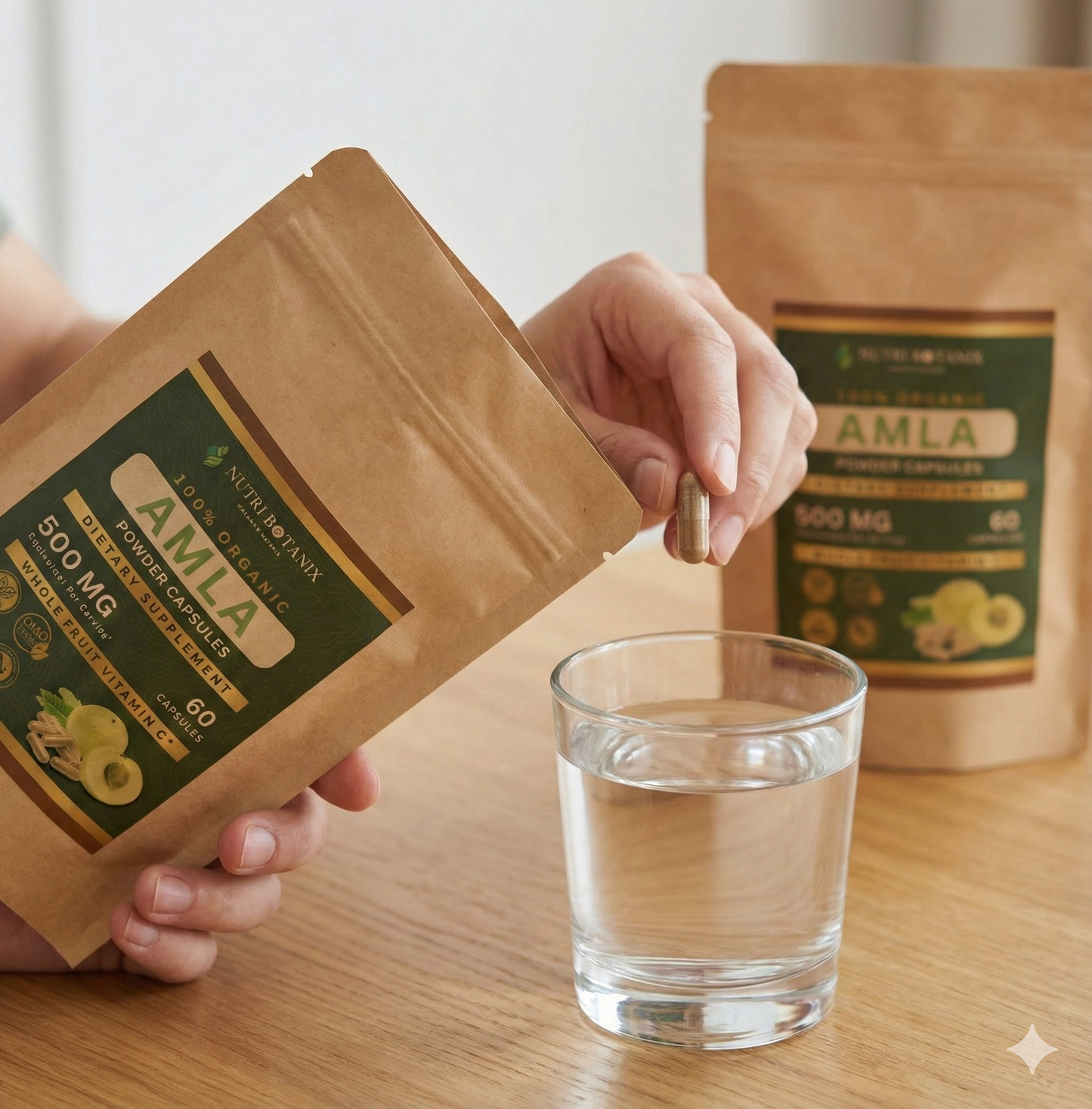
Amla Capsules — Organic Amla Fruit Powder in Pullulan Vegetarian Capsules
Amla (Emblica officinalis), also known as Indian Gooseberry or Amalaki, is one of the most revered fruits in Ayurvedic tradition — a Rasayana botanical used for centuries in classical practice and considered the central fruit of the Triphala formula. Our capsules contain one ingredient: organic Amla fruit powder, encapsulated in a pullulan vegetarian shell.
No fillers. No binders. No extract concentrates. Just the whole fruit, dried and powdered.
At a Glance
- Botanical name: Emblica officinalis
- Common names: Amla, Amalaki, Indian Gooseberry
- Part used: Fruit
- Form: Organic Amla fruit powder
- Region of origin: India
- Capsule shell: Pullulan (plant-based vegetarian capsule — no gelatin)
- Other ingredients: None
- Sizes available: 30-count, 60-count
What Is Amla?
Amla (Emblica officinalis) is a small, round fruit native to the Indian subcontinent, where it has been used as both a food and a botanical for thousands of years. It grows on a deciduous tree found throughout tropical and subtropical India, and is harvested primarily in the autumn months.
In classical Ayurvedic texts — including the Charaka Samhita — Amla is classified as a primary Rasayana herb, meaning a rejuvenating, nourishing botanical used to support vitality and long-term wellbeing. The Sanskrit name Amalaki refers to this fruit specifically, and it is one of the most frequently mentioned botanicals in the classical Ayurvedic literature.
Amla is the central fruit of the traditional Triphala formula — one of the most important compound formulas in the Ayurvedic tradition. It is naturally rich in Vitamin C and has been valued in both culinary and botanical traditions across South Asia for its tart, astringent flavor and its broad presence in traditional food preparations, pickles, chutneys, and Ayurvedic rasayanas.
Amalaki — The Ayurvedic Name
The name Amalaki comes from Sanskrit and is the classical Ayurvedic designation for this fruit. Classical texts describe Amalaki as associated primarily with the Pitta dosha and classify it as having all five of the classical tastes (sweet, sour, pungent, bitter, and astringent) — a characteristic considered significant in Ayurvedic pharmacology. It is one of a small number of botanicals described in classical texts as Tridoshic (balancing to all three doshas) when prepared correctly.
Why Pullulan Capsules?
Pullulan is derived from tapioca — a naturally fermented, plant-based material. Unlike gelatin capsules (which are animal-derived), pullulan capsules are suitable for vegetarians and vegans and have lower oxygen permeability than most capsule materials, which helps preserve the botanical contents. We use pullulan across our entire capsule line.
Sourced Through Direct Relationships
Our botanicals are sourced through direct supplier relationships developed during sourcing trips to India. We do not source from distributors or catalog suppliers. Every batch begins with knowing where the material came from.
Lab Testing & Certificate of Analysis
Every batch we carry is tested before it ships. We make the results available so you can verify what you're purchasing.
View our Certificate of Analysis and lab reports →
How to Use
- Suggested use: Take 1–2 capsules daily with water, or as directed by your healthcare practitioner.
- Traditional timing: Amla is commonly taken in the morning in traditional Ayurvedic practice, often on an empty stomach or with warm water.
- Can I open the capsules? Yes — the powder inside is organic Amla fruit powder and can be added to warm water, juice, or other beverages.
- Note on flavor: Amla has a characteristic tart, astringent taste — noticeable if the capsule is opened.
- Storage: Store in a cool, dry place away from direct sunlight.
Related Products
- Amla Powder — the same organic Amla fruit powder in loose form for beverages and traditional preparations
- Triphala Capsules — the classical three-fruit Ayurvedic formula (Amla, Haritaki, Bibhitaki) in pullulan capsules
- Triphala Powder — the same three-fruit formula in loose powder form
- Shop the Ayurvedic Essentials Collection →
Frequently Asked Questions
Is this a standardized extract?
No. These capsules contain organic Amla fruit powder — the whole fruit, dried and powdered. No extraction, no concentration ratio, no standardized percentage. This is a whole-fruit botanical preparation.
What is pullulan and why do you use it?
Pullulan is a plant-derived capsule material made through natural fermentation of tapioca. It is vegetarian, vegan, and has lower oxygen permeability than standard HPMC or gelatin capsules, which helps protect the botanical contents.
Is this certified organic?
Yes. The Amla fruit powder in these capsules is certified organic.
What is the relationship between Amla and Triphala?
Amla (Amalaki) is the central fruit of the traditional Triphala formula — one of the most important compound formulas in Ayurvedic tradition. Triphala combines equal parts Amla, Haritaki, and Bibhitaki. If you're interested in the full three-fruit formula, see our Triphala Capsules.
How is Amla Capsules different from Amla Powder?
Same organic fruit powder — different format. The capsules offer a convenient, pre-measured daily serving. The loose powder allows you to blend it into beverages, adjust your serving size, or use it in traditional preparations.
These statements have not been evaluated by the Food and Drug Administration. This product is not intended to diagnose, treat, cure, or prevent any disease.
Share